
Blog > What to Expect When Buying a Short-Term Rental in Waikoloa, HI
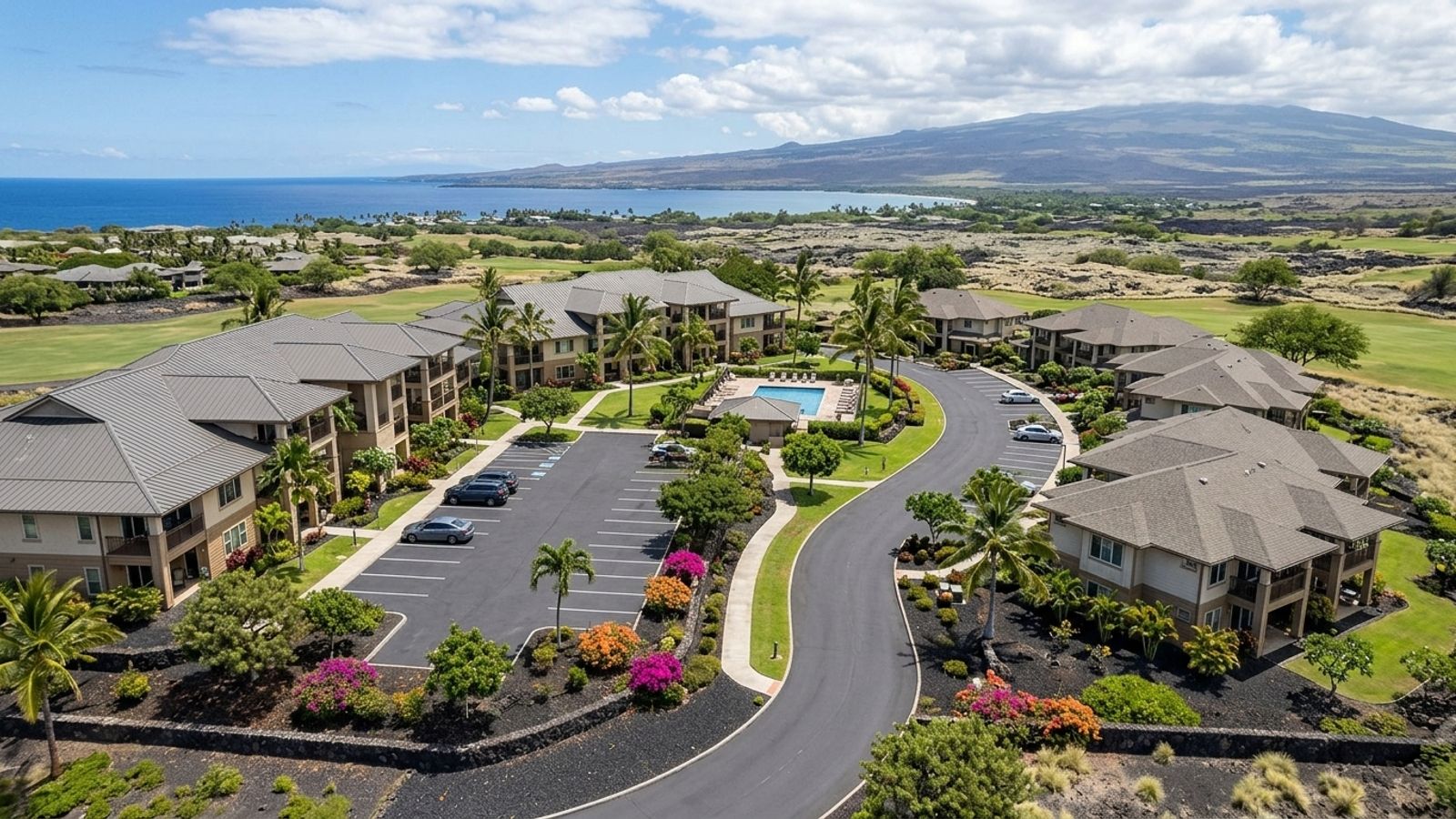
The median sale price for homes for sale in Waikoloa Village is sitting around $785,000 right now, with homes spending roughly 98 days on the market. Supply runs about 8.2 months, so you have time to be deliberate. That's what draws a lot of out-of-state buyers to the Kohala Coast - the idea of generating income while keeping a personal retreat on the island.
What they don't always anticipate is how binding the local zoning rules are, or how quickly the tax math adds up. A successful purchase here depends almost entirely on getting the zone right before you fall in love with a property. Know the specific boundaries, the permit costs, and the seasonal demand patterns before you write an offer.
Why Investors Target the Kohala Coast
Waikoloa pulls visitors year-round. The heaviest stretch runs mid-December through April, which lines up with Hawaii's best weather and the annual whale-watching season at Anaeho'omalu Bay. July brings another wave of summer family travel and holiday bookings.
Local events give that calendar some structure. The Lunar New Year Celebration at Queens' Marketplace kicks things off, then the Lavaman Waikoloa Triathlon in April, followed by the Hawai'i Lodging & Tourism Association Charity Walk in May. Island-wide draws like the Merrie Monarch Festival and the October Ironman World Championship in Kona push overflow bookings up the coast into Waikoloa consistently - those are nights you can count on.
Hawaii County Vacation Rental Rules and Zoning
Hawaii County governs short-term vacation rentals under Ordinance 2018-114, commonly known as Bill 108. The planning department prohibits new unhosted rentals in standard residential and agricultural zones. To operate legally, you have to buy in a permitted area - a Resort-Hotel zone, a multi-family commercial zone, or a General Plan Resort node.
If you're looking at a property that's already operating as a rental outside those zones, it needs to hold a Nonconforming Use Certificate, and you'll want to confirm whether that certificate can transfer to you. In June 2025, the county passed Ordinance 25-50 updating registration rules for both hosted and unhosted units. A new permit runs $501 total - a $500 fee plus a $1 processing charge - and the county typically takes 90 days to work through the application.
How Location Dictates Permitting
The address is everything. Condominium complexes inside the Waikoloa Beach Resort - Fairway Villas, Kolea, Hali'i Kai - sit in permitted resort zones where short-term renting is standard practice. That's where the path is clean.
Up the hill in Waikoloa Village, the rules shift entirely. Single-family lots are zoned RS-10, which strictly prohibits transient rentals. Some multi-family residential condos in the Village might technically qualify for a permit, but many of their homeowner associations ban short-term rentals outright, which takes you right back to square one.
Association Rules and Restrictions
County zoning is only half the equation. Even where the zone allows it, the property's homeowner association can shut it down. Associations govern their communities through Covenants, Conditions, and Restrictions, and those documents control what you can do with the unit. Read them before you submit an offer - not after.
In Waikoloa Village, complexes like Elima Lani and The Point explicitly prohibit short-term rentals through their association rules. If you want a straightforward path to legal operation without fighting your own HOA, focus your search on the Waikoloa Beach Resort area.
Finding the Right Property Type for Guests
Resort condos offer the most direct route to consistent bookings - they're in permitted zones and they already come with the shared facilities visitors expect. Standalone luxury homes in resort nodes can reach a different tier entirely; some four- to six-bedroom oceanfront estates are renting for $3,600 to $7,800 or more per night.
Guests booking on the Kohala Coast are making a deliberate spending decision, and they have expectations to match.
Features That Command Higher Rates
Ocean views, private or resort-style pools, and air conditioning show up in nearly every top-performing listing. Large private lanais with comfortable seating or outdoor kitchens move the needle for families.
Access to resort amenities - beach clubs, fitness centers, golf courses - keeps occupancy steady between peaks. Listings that bundle extras, like Hilton pool passes for Waikoloa Beach Resort access, tend to book faster and at stronger rates than properties that can't offer that kind of access.
Estimating Your Costs and Returns
Revenue projections vary considerably depending on exactly where the property sits and what condition it's in. According to 2026 data from AirROI, rentals in the Waikoloa Beach Resort average $84,147 in annual revenue, with an average daily rate of $569 and a 48.9% occupancy rate. The top 10% of properties in that resort area hit occupancy above 81% and nightly rates exceeding $847.
Broader Waikoloa figures are more modest - largely older units or properties further from the water. Across the wider area, average annual revenue sits closer to $42,094, with occupancy around 43%. Peak season from January through March pushes occupancy up to roughly 66.8%, with daily rates nearing $391.
Lodging Taxes and Registration Fees
Hawaii's tax structure deserves a dedicated conversation with your accountant. As of 2026, operators must collect a state Transient Accommodations Tax of 11%, plus a Hawaii County TAT surcharge of up to 3% - roughly 14% combined at the TAT layer alone. You also collect the General Excise Tax, which reaches up to approximately 4.712% when passed on to guests. Put it together and you're looking at about 18% to 19% added on top of the room rate.
Registering with the state requires a $20 GET fee and a TAT fee of $5 for one to five units, or $15 for six or more.
Steps to Purchase Your Investment Property
The local market currently shows about 77 active listings in the Village area, with homes selling at roughly 96.6% of list price. About 7% are going above asking, so permit-ready properties in the right zones still attract real competition.
Work with a local agent who knows the county's STVR rules and can read a zoning map - not someone who'll figure it out alongside you. A good agent can verify whether a specific condo complex allows transient rentals and confirm whether an existing Nonconforming Use Certificate can transfer to a new owner. Those two questions alone can save you from a very expensive mistake.
Common Questions About Waikoloa Vacation Rentals
Is it legal to operate a short-term rental in Waikoloa?
Yes, provided the property is in a permitted zoning district - a Resort-Hotel zone or a General Plan Resort node. Properties outside those zones can only operate legally if they hold a grandfathered Nonconforming Use Certificate.
Do I need a special permit for a vacation rental in Waikoloa?
Yes. Hawaii County requires a Short-Term Vacation Rental permit for all legally operating units. The application costs $501 total and takes roughly 90 days to process.
What is the average occupancy rate for rentals in Waikoloa?
It depends on location and season. Properties in the Waikoloa Beach Resort average around 48.9% occupancy annually. Broader Waikoloa averages closer to 43%, with peak winter months pushing occupancy past 66%.
Are short-term rentals allowed in Waikoloa Village, or only in the Waikoloa Beach Resort area?
Rentals are primarily restricted to the Waikoloa Beach Resort area. Waikoloa Village single-family homes are zoned RS-10, which prohibits transient rentals, and many of the condo associations in the Village ban them as well.
How much are typical HOA fees for vacation rental condos in Waikoloa?
It depends on the specific complex. Review the association documents for each building - costs vary based on pool maintenance, elevator access, and groundskeeping.
Do I need a local property manager for my Waikoloa short-term rental if I live on the mainland?
It depends on your availability. Mainland owners often hire local management to handle island-specific maintenance, cleaning, and guest turnovers while staying on top of county tax collection requirements.
Leave a Reply

Agent RS 83053