
Blog > Investing in Waikoloa, HI: Short-Term Rental Regulations
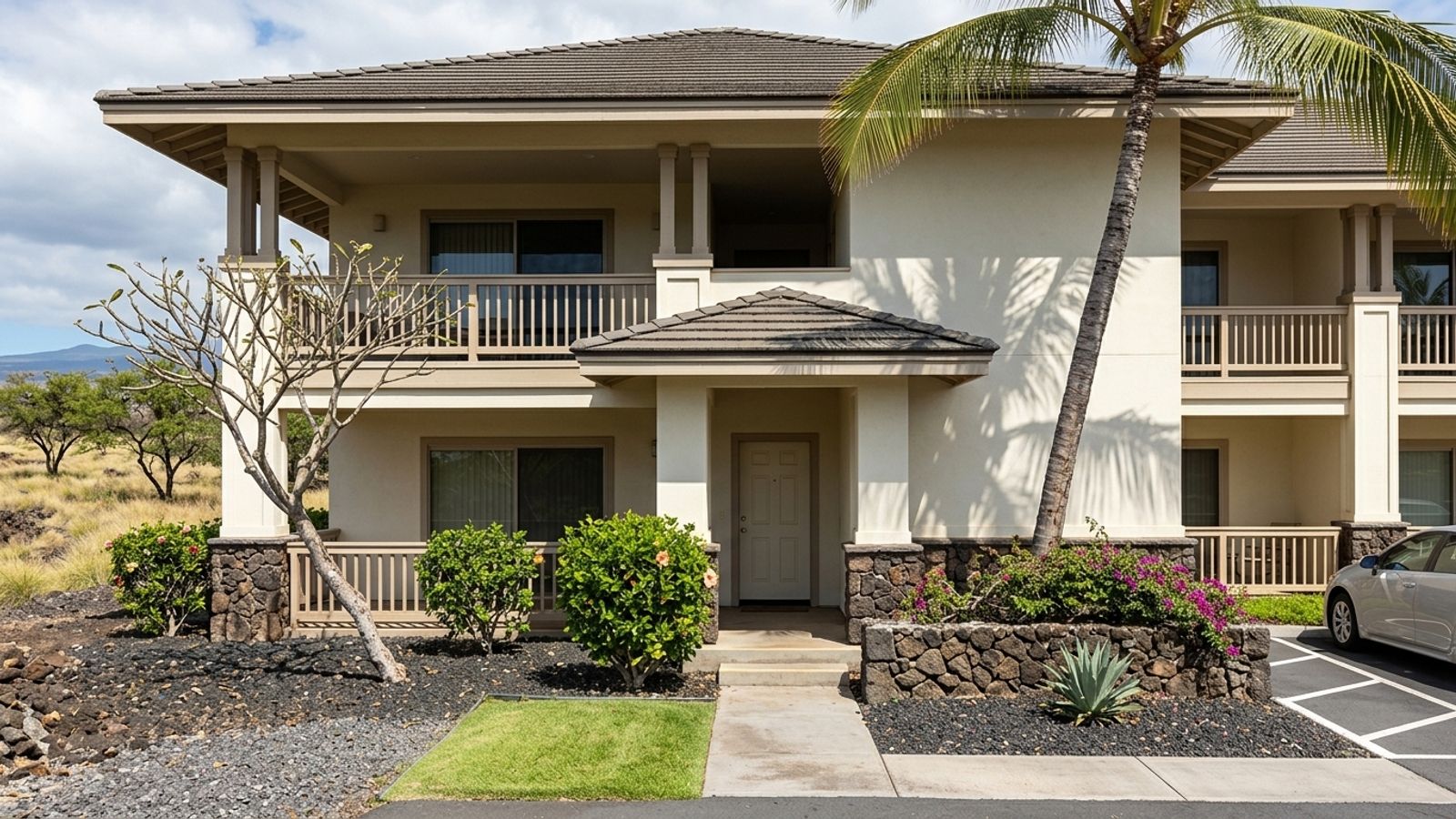
The median home price in Waikoloa Village, HI sits around $785,000 right now, with homes averaging about 98 days on the market. Over eight months of housing supply means you've got time to look carefully - that's not a luxury buyers have had in most recent cycles. For anyone buying a short-term rental in Waikoloa, HI, the first question isn't which unit has the best ocean view. It's whether that property can legally generate rental income at all.
Hawaii County runs a strict regulatory framework for anyone planning to list on Airbnb or VRBO. Ordinance 25-50 made registration mandatory for all transient vacation rentals, with a deadline of September 1, 2026. Before you make an offer, you need to understand what zone a property sits in, what permits cost, and what taxes you'll owe - because those details will determine whether the numbers work.
How Hawaii County Defines a Short-Term Vacation Rental
Hawaii County uses precise language here, and it matters. A Short-Term Vacation Rental (STVR) is a dwelling unit rented for 30 consecutive days or less, with no more than five bedrooms available for rent. That definition applies specifically when the owner or operator doesn't live on-site during the rental period.
The rules are still moving. Beyond the September 1, 2026 mandatory registration deadline under Ordinance 25-50, lawmakers are also reviewing proposed Bill 147. If it passes, that bill would redefine STVRs to cover rentals of up to 180 days and collapse both hosted and unhosted rentals into a single category called Transient Vacation Rentals (TVR). Anyone buying now should keep an eye on how that legislation develops.
Where You Can Legally Operate a Vacation Rental
Hawaii County doesn't use density caps or distance requirements between STVRs in Waikoloa. Eligibility comes down to two things: the property's zoning classification and whatever private community rules apply to it. If you want an unhosted vacation rental, you're targeting areas zoned for commercial or resort use - full stop.
Residential and agricultural zones generally prohibit short-term rentals unless a specific exemption is in place. That distinction cuts the Waikoloa investor market into two very different categories: the coastal resort areas and the inland village neighborhoods.
Resort Zones vs. Waikoloa Village
Unhosted STVRs are permitted by right in Resort (V) and commercial zoning districts. That makes the Waikoloa Beach Resort area the primary target for investors - the zoning explicitly supports vacation rentals, and you're not fighting the county to operate one.
Waikoloa Village is a different story. It consists mostly of residential and agricultural zones where new unhosted STVRs are restricted. You can't buy a standard single-family home there and convert it into a short-term rental under current county law. That's a hard stop, not a gray area.
Non-Conforming Use Certificates
There is one exception to the residential zoning restriction - a grandfathered Non-Conforming Use Certificate (NUC). An NUC allows an existing STVR in a non-permitted zone to keep operating, but only if the rental was established before April 1, 2019.
Here's the catch: NUCs can't be transferred to new applicants. If you buy a property in Waikoloa Village that currently runs under an NUC, that certificate does not automatically pass to you at closing. The property loses its legal STVR status the moment ownership changes. That's something buyers sometimes miss, and it's a significant due diligence item.
The Permitting and Registration Process
To legally operate a short-term rental, you'll submit an application to the Hawaii County Planning Department. Under the mandatory registration rules, you need your legal operating status confirmed before you list the property anywhere.
The fees are specific. Initial registration runs $500 for an unhosted STVR and $250 for a hosted rental. After that, you're looking at annual renewals - $250 for unhosted properties and $100 for hosted ones. Build those into your projections from the start.
Taxes Required for Vacation Rentals
This is where a lot of investors underestimate their carrying costs. Hawaii levies two separate taxes on short-term rental income - the Transient Accommodations Tax and the General Excise Tax - and both apply to gross rental income.
Run these numbers before you model any returns.
Transient Accommodations Tax (TAT)
As of January 1, 2026, the Hawaii State Transient Accommodations Tax (TAT) is set at 11%. Hawaii County adds a 3% TAT surcharge on top of that, bringing your total TAT for a Waikoloa vacation rental to 14%. You collect this from guests and remit it to the appropriate tax authorities.
General Excise Tax (GET)
Hawaii doesn't use a traditional sales tax. Instead, the General Excise Tax (GET) applies to nearly all business activity, including rental income. The base state GET is 4%, and Hawaii County adds a 0.5% surcharge - making the total GET 4.5% for properties in Waikoloa.
Add it together and owners are responsible for 18.5% in total taxes on rental revenue. That's not a minor line item.
Homeowner Association Rules and Condo Covenants
County approval is necessary, but it's not sufficient. Hawaii County zoning does not override the private bylaws, Covenants, Conditions, and Restrictions (CC&Rs) enforced by the Waikoloa Village Association or individual resort homeowners associations.
A condo in a Resort (V) zone - where the county fully permits STVRs - can still be effectively shut down for short-term rentals if the building's HOA prohibits them. Those are two separate approvals, and you need both. Review the specific community rules before you make a purchase, not after.
STVR-Friendly Complexes in Waikoloa
In the Waikoloa Beach Resort area, complexes known to allow short-term rentals include Fairway Villas, Hali'i Kai, Kolea, The Shores at Waikoloa, Waikoloa Beach Villas, and Waikoloa Colony Villas.
In Waikoloa Village, eligible complexes include Fairway Terrace, Paniolo Greens, Waikoloa Fairways, Waikoloa Hills, and Waikoloa Villas I & II. Availability in these buildings typically depends on existing zoning exemptions or specific community declarations that permit transient rentals - so confirm the current status directly before relying on any list.
Frequently Asked Questions
Do I need a permit to operate a short-term rental in Waikoloa?
Yes. Ordinance 25-50 requires mandatory registration for all transient vacation rentals as of September 1, 2026. The initial registration fee is $500 for unhosted rentals and $250 for hosted rentals.
Are there zoning restrictions for short-term rentals in Waikoloa?
Yes. Unhosted short-term rentals are permitted in Resort and commercial zones like Waikoloa Beach Resort. They are restricted in residential and agricultural zones, such as Waikoloa Village, unless the home has a pre-existing Non-Conforming Use Certificate.
What taxes do short-term rental owners pay in Waikoloa?
Owners pay a total of 18.5% in taxes on rental income. This includes a 14% Transient Accommodations Tax (11% state, 3% county) and a 4.5% General Excise Tax (4% state, 0.5% county).
Can an HOA ban short-term rentals in Waikoloa?
Yes. Hawaii County approval does not override private community rules. An HOA or AOAO can restrict or ban short-term rentals within its specific complex or subdivision.
Leave a Reply

Agent RS 83053