
Blog > How to Furnish and Manage a Short-Term Rental in Waikoloa, HI
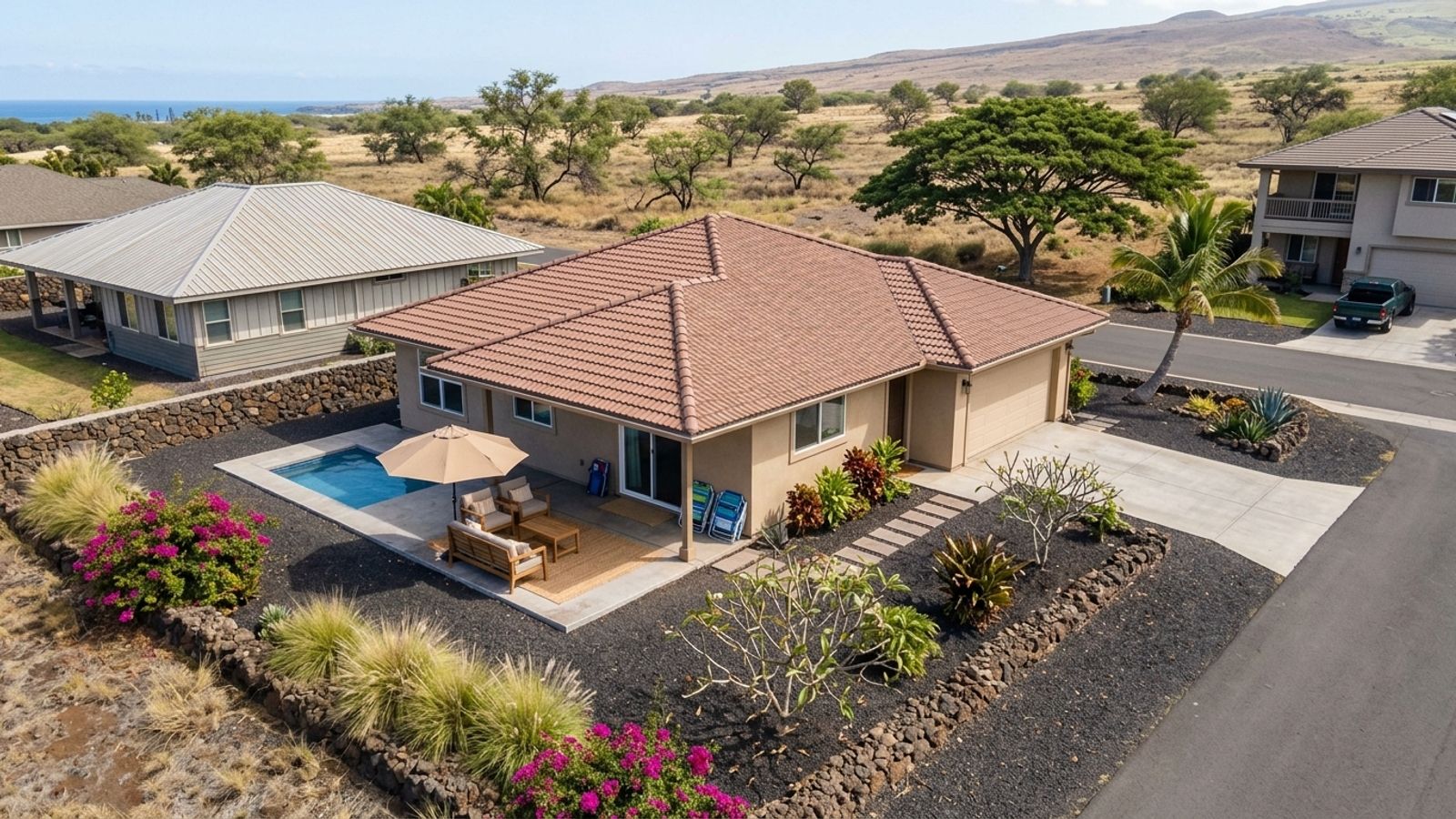
The median sale price for a home in Waikoloa Village sits at roughly $784,000, with properties averaging 98 days on the market. That's a significant investment, and when buying a short-term rental in Waikoloa, buyers on the Kohala Coast frequently look to consistent bookings to offset ownership costs. Running a profitable rental here means getting honest with yourself about two things: what it costs to furnish a property for a tropical coastal environment, and what it takes to manage one from day to day.
Waikoloa isn't one market - it's two. The Waikoloa Beach Resort area operates differently than the residential neighborhoods of Waikoloa Village, both in terms of what guests expect and what county zoning allows. You'll want to understand which side of that line your property sits on before you start shopping for furniture or building a listing.
Understanding the Waikoloa Short-Term Rental Market
Occupancy rates here range from 48% to 75%, and where your property lands in that range depends on the neighborhood and the specific unit. Waikoloa Village sits at a 48% median occupancy rate; the Waikoloa Beach Resort area comes in at 54%, with top-tier properties clearing 80%. The consistent draw is access to Anaehoomalu Bay and the broader Kohala Coast.
Peak demand runs in two waves: mid-December through April, and again from June through August. Beyond those seasonal patterns, a handful of annual events drive meaningful spikes in nightly bookings. The Lavaman Triathlon, the Waikoloa Lei Day Festival, the Great Waikoloa Ukulele Festival, and the Lunar New Year Celebration at Queens' Marketplace all pull concentrated visitor traffic. If you're managing your own pricing, these dates belong on your calendar.
Furnishing Your Waikoloa Short-Term Rental
Furnishing a two-bedroom vacation rental in Hawaii typically runs between $6,750 for a basic setup and $25,000 or more for a premium package. What makes those numbers higher than comparable setups on the mainland is the freight. Getting furniture to the Big Island costs real money, and that shipping premium hits every line item in your budget. Plan for it before you start buying.
The climate here isn't forgiving to standard retail furniture. Salt air and sustained humidity degrade materials faster than most owners expect, and replacing a sofa or a dining set every two years is a slow way to lose money. Buying commercial-grade pieces upfront is a straightforward investment in not doing this twice.
Choosing Durable, High-Traffic Furniture
For outdoor spaces, aluminum frames, teak, and high-density polyethylene (HDPE) hold up against coastal conditions. Iron and standard steel corrode - skip them. Indoors, performance fabrics on sofas and chairs handle what guests do to furniture: sunscreen, wet swimsuits, and everything else that comes with a beach vacation.
Design matters on the listing platforms. Wood tones, natural textures, and understated tropical prints give guests the island aesthetic they're looking for on Airbnb and VRBO. Keep surfaces clean and uncluttered - fragile decor just creates problems for your cleaning crew and your reviews.
Expected Amenities for Guests
Fast Wi-Fi, smart TVs, and reliable air conditioning aren't differentiators - they're the baseline. A smart thermostat lets you monitor and adjust cooling remotely, which matters more than you might think. Guests will leave the AC running at full capacity all day while they're at the beach, and you'll see it in your utility bills.
Beach gear is where you can move the needle on reviews. Chairs, large umbrellas, and hard-sided coolers are bulky items most mainland travelers don't pack. Properties that provide them consistently earn better ratings, which compounds over time.
Stocking the Kitchen and Bathrooms
Stock the kitchen with enough plates, silverware, and glassware for double the maximum occupancy. It keeps guests from running the dishwasher after every single meal. Quality blenders, coffee makers, and rice cookers are standard expectations for Hawaii vacation rentals - not optional extras.
For bathrooms, buy durable, bleach-safe towels in volume. Provide a separate set in a distinctly different color specifically for beach use. White bath towels and red volcanic dirt do not mix well, and guests will use whatever towels are available.
Managing Your Short-Term Rental Property
The median cleaning fee runs approximately $309 in Waikoloa Village and $549 in the Waikoloa Beach Resort area. During peak season, back-to-back bookings are the norm, and coordinating turnovers efficiently depends on having a reliable network of local cleaners and handymen already in place before you need them.
The self-manage versus property manager question comes down to where you live and how much time you have. Local managers handle midnight maintenance calls, guest communications, and vendor coordination in exchange for a percentage of gross revenue. If you're off-island, that arrangement isn't optional - it's the difference between a functioning rental and a recurring headache.
Listing and Pricing Your Rental
Your listing description should be specific. Walking distance to Anaehoomalu Bay, proximity to Waikoloa Village golf courses - these are the details that help guests choose your property over a comparable one. Professional photography that shows the lanai and any ocean views does real work in justifying your nightly rate.
Dynamic pricing tools can automatically raise rates during high-demand periods like the Lavaman Triathlon or the winter holidays, then pull them back during slower shoulder seasons to keep occupancy steady. It's a more responsive approach than setting a flat rate and leaving it.
Coordinating Cleaning and Turnover
The turnover window is tight - checkout at 10:00 AM, check-in at 4:00 PM. Within those six hours, cleaners wash linens, restock consumables, and confirm no damage occurred during the previous stay. There isn't much margin for error.
Keeping a complete secondary set of linens and towels for every bed and bathroom solves a lot of that timing pressure. Cleaners swap out the dirty set for the fresh one and handle laundering off-site or during the next cycle. It's a small operational adjustment that keeps turnovers from running long.
Automating the Guest Experience
Smart locks eliminate key handoffs and lockouts. You can generate a unique access code for each reservation that expires automatically at checkout, which also tightens overall property security. Automated messaging handles the rest - check-in instructions, driving directions, and the house manual reach guests exactly when they need them, without you answering the same questions on repeat.
Local Regulations and Taxes in Hawaii County
Hawaii County charges a $500 registration fee for unhosted short-term vacation rentals and $250 for hosted Bed & Breakfasts. You need that permit in hand before your property goes live on Airbnb or VRBO. Operating without it isn't a gray area - it's a violation of local law.
Zoning is where a lot of owners get into trouble. The rules that apply to a property inside the Waikoloa Beach Resort are not the same rules that apply in Waikoloa Village. Beyond county zoning, HOA restrictions are an entirely separate layer - many communities explicitly prohibit rentals under 30 days regardless of what the county permits.
On the tax side, you're required to collect and remit three separate charges on all rental income: the State Transient Accommodations Tax (TAT) at 11%, the Hawaii County TAT surcharge at 3%, and the General Excise Tax (GET) at 4.5%. The GET can be passed on to the guest, with a maximum effective pass-on rate of 4.712%.
Frequently Asked Questions
How much does it cost to furnish a short-term rental in Waikoloa?
Furnishing a two-bedroom vacation rental in Hawaii generally runs between $6,750 for basic items and over $25,000 for premium packages. Those figures reflect the high shipping and freight premiums required to get furniture to the Big Island.
Do I need a permit to operate a short-term rental in Waikoloa?
Yes. You must hold a Short-Term Vacation Rental (STVR) permit from Hawaii County before listing your property. The registration fee is $500 for unhosted rentals and $250 for hosted Bed & Breakfast properties.
Should I manage my Waikoloa short-term rental myself or hire a property manager?
It depends on where you live and how available you are. Local managers handle turnovers, maintenance, and the $309 to $549 median cleaning fees on your behalf. Off-island owners generally need a manager to keep day-to-day operations running.
Which amenities and furnishings yield the best returns for Waikoloa vacation rentals?
Durable, salt-air resistant outdoor furniture and performance indoor fabrics hold their value by reducing how often you replace things. Guests also consistently prioritize beach gear - chairs, umbrellas, and coolers - along with reliable air conditioning.
What Hawaii County taxes do I need to collect and pay for my Waikoloa rental?
You're required to collect an 11% State Transient Accommodations Tax (TAT), a 3% Hawaii County TAT surcharge, and a 4.5% General Excise Tax (GET). The GET translates to a maximum effective pass-on rate of 4.712% when passed through to the guest.
Are short-term rentals allowed in all Waikoloa neighborhoods or just the resort areas?
No. Zoning laws and HOA restrictions vary between designated resort nodes like Waikoloa Beach Resort and residential areas like Waikoloa Village. You can't assume your property qualifies simply because a neighboring one does.
Leave a Reply

Agent RS 83053