
Blog > Where Short-Term Rentals Are Allowed in Waikoloa, HI: A 2026 Buyer's Guide
Where Short-Term Rentals Are Allowed in Waikoloa, HI: A 2026 Buyer's Guide
by
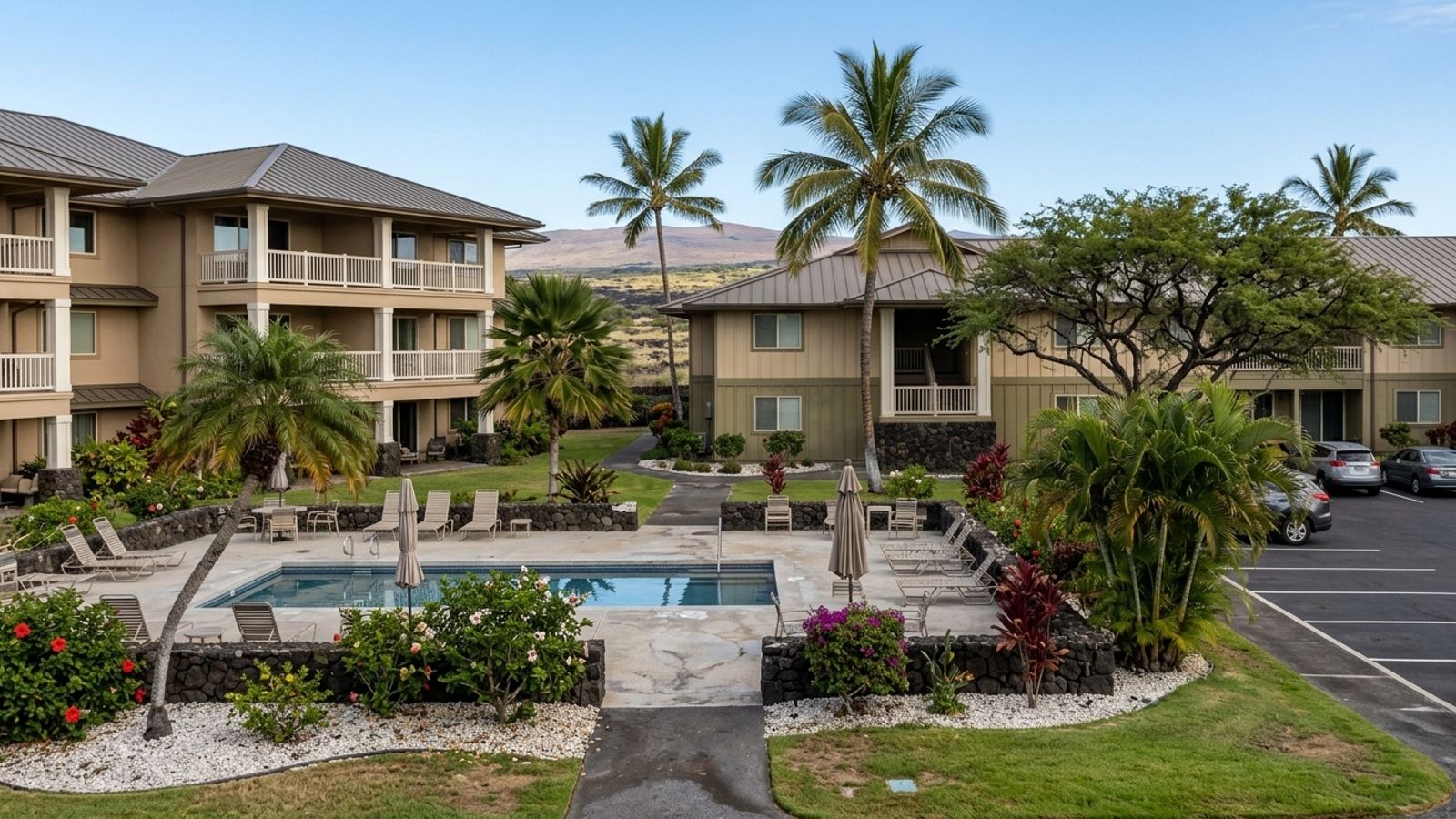
The median home price in Waikoloa Village is around $785,000 right now, and homes are sitting on the market for roughly 98 days. A lot of buyers coming to me about this area are looking at it as an investment property or second home - they want to offset carrying costs by renting to vacationers when they're not here. That's a reasonable plan, but it only works if the property can legally support it. Verifying the zoning is the first step when buying a short-term rental in Waikoloa, HI.
Hawaii County defines a short-term rental as any stay under 30 days. Operating one legally requires the right zoning, a county permit, and compliance with whatever your HOA has to say about it. Getting this wrong after closing is an expensive lesson.
Hawaii County Short-Term Rental Regulations
Unhosted, non-owner-occupied short-term vacation rentals (STVRs) are restricted to specific zoning districts on the Big Island. Hawaii County's Bill 108 - also known as Ordinance 2018-114 - established the baseline rules for where investors can operate these properties.
Unhosted rentals are barred in standard single-family residential zones, including the RS-10 lots common in Waikoloa Village, and in agricultural zones. The only workaround for a property in one of those restricted areas is a pre-existing Nonconforming Use Certificate (NUC).
County Zoning Ordinances Versus State Laws
Hawaii County handles its own zoning and permitting for the Big Island, separate from state-level mandates. Permitted zones for unhosted STVRs include Resort-Hotel (V) and General Commercial (CG). Village Commercial (CV) areas allow them too, but operators have to secure a use permit first.
General Plan Resort or Resort Node areas also permit unhosted rentals, provided the specific RS district gets a use permit. If you want to run a whole-home vacation rental, your search needs to stay inside these commercial and resort zones. Buy outside those designations and you can't legally host stays shorter than 30 days - unless you're living on the property yourself.
Hosted Versus Unhosted Rental Requirements
When the owner lives on-site alongside the guest, the property is considered a hosted rental or bed-and-breakfast. Bill 108's unhosted-rental zoning restrictions don't apply to those owner-occupied arrangements.
That doesn't mean the county steps back entirely. Under Ordinance 25-50, a hosted-rental registration requirement applies across Hawaii County. Owners must register their primary residence if they plan to rent out a room or attached suite to vacationers.
Checking Property Eligibility in Waikoloa
The Hawaii County Planning Department maintains an official Short-Term Vacation Rentals resource page at planning.hawaiicounty.gov/resources/short-term-vacation-rentals. That's where you'll find the necessary forms, Rule 23 references, and zoning guidance to verify a property's legal status.
The underlying zoning rules fall under Hawaii County Code Chapter 25, specifically Articles 1, 2, 4, and 5. Check the county's zoning maps against any address you're considering before you write an offer - not after.
Reading the Local Zoning Codes
The first thing you want to nail down is the exact zoning designation on the parcel. A property listed as RS-10 won't qualify for a new unhosted STVR permit. A condo in a Resort-Hotel (V) zone likely will.
If a home in a restricted zone claims to carry a Nonconforming Use Certificate, ask for a copy during the inspection period. NUCs must be renewed annually, and a lapse in renewal can permanently revoke the property's rental eligibility. That's not a small detail.
Reviewing Homeowners Association Documents
County zoning is only one layer. Community rules matter just as much. Homeowners Associations can enforce Covenants, Conditions, and Restrictions (CC&Rs) that ban short-term rentals entirely - even when the county zoning would otherwise allow them.
This creates a real divide between neighborhoods. Many subdivisions in Waikoloa Village prohibit short-term leasing, while associations in the Waikoloa Beach Resort area are typically structured to accommodate transient guests. Review the CC&Rs and confirm minimum lease terms before you're in contract, not during a scramble at the end of escrow.
The Permitting Process and Local Taxes
Getting a short-term rental off the ground means upfront registration fees and ongoing tax obligations. The initial registration fee for an unhosted rental is $500, with a $250 annual renewal. Hosted rentals have a lower entry point - $250 to register initially and $100 for annual renewal. Hosting platforms like Airbnb and Vrbo pay a separate $1,000 fee and submit monthly reports to the county.
Application Fees and Compliance Inspections
The application itself requires a site, floor, and parking plan, along with proof of insurance, local contact information, and evidence that property taxes are current.
The county doesn't just collect the paperwork and move on. The registration Statement of Compliance notes that the Planning Director may request a site inspection to verify the property meets all standards. Operators also need to be reachable by phone within one hour of a complaint and physically present at the property within three hours. If you're managing this remotely, that last requirement needs a plan.
Transient Accommodations and General Excise Taxes
Hawaii levies two primary taxes on short-term rental income. As of 2026, operators pay an 11% state Transient Accommodations Tax (TAT) plus a 3% Hawaii County TAT (HCTAT), for a combined 14% TAT. On top of that, there's the General Excise Tax (GET) - the state rate is 4%, and Hawaii Island adds a county surcharge, bringing the combined GET rate to 4.166% for Waikoloa properties.
Run the numbers on those combined rates before you run the numbers on your rental projections.
Buying an Investment Property on the Kohala Coast
Inventory in Waikoloa Village is sitting at around 77 available homes, with properties taking just over three months to sell on average. There's a mix of housing types to consider, but what you intend to do with the property should drive which type you're looking at.
The average sale-to-list price ratio is hovering around 96.5%, so there's some room to negotiate. Properties in permitted STVR zones that are move-in ready tend to hold their value well, given their income potential.
Resort Condos Versus Single-Family Homes
Condominiums in the Waikoloa Beach Resort are generally the most straightforward path to a legal short-term rental. These complexes are typically zoned Resort-Hotel (V), and their HOAs are built around the expectation of transient guests.
Single-family homes in Waikoloa Village offer more space and lower purchase prices, but they usually fall into restricted residential zones. If you're drawn to the Village, you should be planning for long-term rentals of 30 days or more - or looking at a property where you can live full-time and run a hosted rental.
Working With a Local Agent
This kind of purchase requires cross-referencing county zoning maps with specific HOA rules on a property-by-property basis. An agent who knows the Kohala Coast can filter listings by their actual legal rental eligibility, not just their listing description.
They can also pull documentation - existing NUCs, HOA bylaws, CC&Rs - during the escrow period, so you know what you're buying before the sale closes.
Frequently Asked Questions
What is considered a short-term rental in Waikoloa?
Hawaii County defines a short-term rental as any transient accommodation where guests stay for fewer than 30 consecutive days. Leases of 30 days or longer are considered long-term rentals and aren't subject to the same STVR zoning rules.
Which zoning districts and neighborhoods in Waikoloa allow short-term vacation rentals?
Unhosted short-term rentals are allowed in Resort-Hotel (V) and General Commercial (CG) zones, as well as Village Commercial (CV) zones with a use permit. They're also permitted in General Plan Resort or Resort Node areas if the specific RS district secures a use permit.
Do I need a permit to operate a short-term rental in Waikoloa?
Yes. Both hosted and unhosted short-term rentals must be registered with the county. Unhosted rentals in restricted zones also need a pre-existing Nonconforming Use Certificate (NUC) to operate legally.
How much does it cost to get a short-term rental license in Hawaii County?
An unhosted rental requires a $500 initial registration fee and a $250 annual renewal. Hosted rentals cost $250 to register initially, with a $100 annual renewal fee.
Can an HOA ban short-term rentals in Hawaii?
Yes. A Homeowners Association can enforce Covenants, Conditions, and Restrictions (CC&Rs) that prohibit short-term rentals, even if the property sits in a county-approved zoning district. Read the HOA documents before you buy - not after.
Leave a Reply

Agent RS 83053