
Blog > What to Expect for Airbnb Revenue and Occupancy in Waikoloa, HI
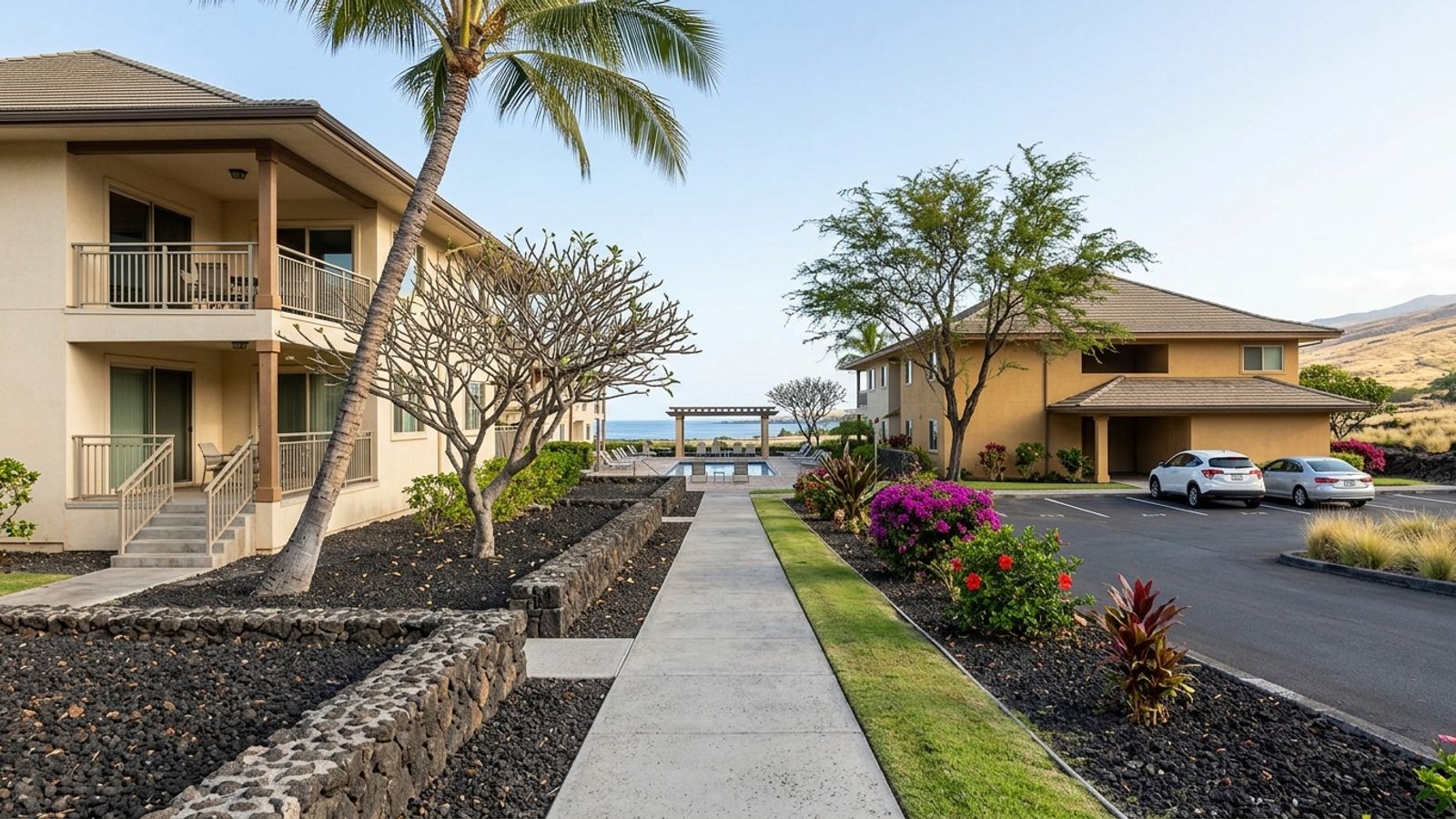
The median home price in Waikoloa Village, HI sits around $785,000 right now, with homes spending roughly 98 days on the market. A lot of buyers drawn to the Kohala Coast are looking at these properties through a rental lens - and honestly, that makes sense given what the area offers. Golf courses, Anaehoomalu Bay, resort infrastructure. The appeal of buying a short-term rental in Waikoloa, HI isn't hard to imagine.
What's harder is knowing whether the numbers pencil out. Evaluating a vacation rental here means getting into local booking data and county law at the same time, because Hawaii County has specific zoning and tax requirements that hit your bottom line in ways that aren't obvious until you're already under contract.
Analyzing Short-Term Rental Income and Booking Rates
The first thing you'll notice when you start researching is that the data sources don't agree with each other - and the gap isn't small. AirROI reports an average occupancy rate of 43%, while AirDNA puts Waikoloa short-term rentals on Airbnb and Vrbo at 59%. Drill into the Waikoloa Village sub-market specifically and Airbtics shows a typical listing booked 259 nights a year, translating to a 71% median occupancy rate - though AirROI places that Village figure closer to 44%.
Take these numbers as a range, not a forecast. They tell you what's possible, not what's guaranteed.
The Average Daily Rate picture is similarly spread out. AirROI has hosts averaging $364 per night. AirDNA reports $480. MasterHost lands at $395, with a February peak of $437 driven by winter travel demand.
Average Daily Rates by Property Type
Where your property sits matters more than almost anything else for your nightly rate. In the Waikoloa Beach Resort area, the ADR averages $569 per night. In the inland Waikoloa Village, you're looking at $396. That's a meaningful gap, and it reflects what resort-zone proximity buys you in terms of guest willingness to pay.
Resort condos and single-family homes also produce different revenue profiles because the amenities aren't the same. If you're weighing a higher purchase price in the Beach Resort against what you'd spend in the Village, the earning potential difference is real - but it doesn't automatically close the gap. Run both scenarios.
Seasonal Trends and Peak Occupancy Months
Peak season follows the broader Big Island pattern: high demand in winter (December through March) and summer (June through August), with the busiest stretches clustered around Christmas, New Year, and Independence Day. Airbnb's peak season runs specifically January through March, with average revenue of $7,547 per month, occupancy around 66.8%, and daily rates averaging $391.
April is worth knowing about separately. The Lavaman Triathlon comes to Waikoloa Beach Resort that month - an event featuring a Pacific Ocean swim and a course through the Hilton Waikoloa Village grounds - alongside the Big Island Chocolate Festival at the Waikoloa Beach Marriott Resort. Those events drive demand in a month that might otherwise soften. The best weather window runs April through October, and the shoulder months - April, May, September, and October - bring lower rates and fewer crowds for guests willing to be flexible.
Local Regulations and Zoning Rules for Vacation Rentals
This is where buyers get tripped up, so pay attention.
Hawaii County is mid-transition on its rental registration framework. Bill 47 was signed into law on June 23, 2025. Separate from that, the county passed Ordinance 25-50 requiring all Transient Vacation Rental owners to register by July 1, 2026. As of early 2026, the online portal for the new system wasn't yet live.
You can't operate a TVR in Hawaii County without registering first - that part isn't ambiguous. Under the older Bill 108 framework, the processing fee was $500 and permits took about 60 to 90 days to issue. Required documentation typically includes a completed registration form, site plan, floor plan, parking plan, proof of property tax compliance, proof of insurance, and local contact information.
Permitting Fees and Tax Rates in Hawaii County
Under the new system, initial registration fees are $500 for unhosted rentals and $250 for hosted rentals. Annual renewals run $250 per year for unhosted and $100 for hosted. Applications go through the Hawaii County Planning Department.
Taxes are layered and they add up fast. Act 96 increased the state Transient Accommodations Tax to 11% for gross rental proceeds recognized on or after January 1, 2026. Hawaii County adds its own 3% county-level TAT on top of that, creating a combined 14% TAT layer. Then there's the General Excise Tax: Hawaii County's combined GET rate is 4.5%, with a maximum pass-on of 4.712%, including a 0.5% county surcharge scheduled to run through December 31, 2030.
That's 14% TAT plus 4.5% GET coming off your gross revenue before you've paid for anything else.
HOA Restrictions to Watch Out For
Zoning draws a line between resort nodes and residential zones - and that line determines whether you can legally operate a short-term rental at all. Waikoloa Beach Resort falls into a resort node where vacation rentals are generally allowed. Waikoloa Village has residential zones with stricter rules.
HOAs layer their own requirements on top of whatever the county says. Before you get attached to a specific unit or home, pull the bylaws and confirm short-term rentals are permitted. Check for minimum stay requirements too - some associations have them.
Estimating Your Return on Investment With a Worked Example
Gross revenue is not your return. That's the thing buyers underestimate most.
Start with that $7,547 peak-month figure. Before you see any of it, you're giving back 14% in combined TAT and 4.5% in GET. What's left still has to cover your mortgage, cleaning, management fees, HOA dues, and that $250 annual unhosted permit renewal.
Management fees are the other number to nail down early. Full-service vacation rental management in Waikoloa starts at 15% of revenue with companies like Awning, while other managers charge between 25% and 40%. MasterHost offers tiered pricing from 8% for online-only service up to 12% for premium full-service per booking. For comparison, long-term rental management in Hawaii typically runs around 10% - so you're paying a real premium for short-term management, and you need to decide whether the higher gross revenue justifies it.
Build your model with the management fee, HOA dues, taxes, and permit costs baked in from the start. Don't back into them after you've fallen in love with the property.
Getting the Most Out of Your Waikoloa Vacation Rental
Guests coming to the Kohala Coast have a clear priority list: resort pools, ocean views, reliable air conditioning, and proximity to beaches and local attractions. Properties that check those boxes tend to book faster during peak windows and hold their ADR better in shoulder months.
Location is still the biggest variable in year-round occupancy. Coastal resort areas draw a different traveler profile than the inland neighborhoods, and that difference shows up in both nightly rate and how consistently the calendar fills.
Choosing Between Waikoloa Village and Waikoloa Beach Resort
The Beach Resort's $569 ADR against the Village's $396 is a real difference - $173 per night adds up quickly over a year. The resort area also offers immediate access to beaches, golf, and events like the Lavaman Triathlon, and that proximity is part of what keeps demand steady through the winter and summer peaks.
The Village is a different kind of investment. Entry price is lower, and the ADR is lower to match. But Airbtics data suggests a 71% median occupancy rate is achievable for a typical listing there, which changes the math on annualized revenue. Neither option is obviously better - it depends on what purchase price you're working with and how you weight nightly rate versus occupancy consistency. Model both.
Frequently Asked Questions
What is the average Airbnb revenue in Waikoloa, HI?
During the peak season of January through March, average revenue hits $7,547 per month. The Average Daily Rate ranges from $364 to $480 depending on the data source. Properties in the Waikoloa Beach Resort average a higher nightly rate of $569.
What is a good occupancy rate for short-term rentals in Waikoloa, HI?
The averages reported by AirROI and AirDNA fall between 43% and 59%. During peak winter months, occupancy rises to around 66.8%. Some data suggests Waikoloa Village properties can reach up to a 71% median occupancy rate.
Are there restrictions on Airbnbs in Waikoloa, HI?
Yes. Hawaii County requires all Transient Vacation Rental owners to register and pay a fee before operating. The deadline to register under Ordinance 25-50 is July 1, 2026. Properties also have to comply with zoning laws that determine where short-term rentals are permitted in the first place.
What hidden fees should I include when calculating ROI for a Waikoloa vacation rental?
Start with the 14% combined state and county Transient Accommodations Tax and the 4.5% General Excise Tax - those come off the top. Property management fees run 15% to 40% of gross revenue depending on the service level. Annual unhosted permit renewals are $250 per year.
How long does it take to get a short-term vacation rental permit approved in Waikoloa, HI?
Under the older Bill 108 framework, permit issuance took about 60 to 90 days. The county is currently transitioning to a new system under Ordinance 25-50, and applications are processed through the Hawaii County Planning Department.
What property upgrades yield the highest Airbnb returns in the Waikoloa market?
Reliable air conditioning and access to resort pools are what guests consistently prioritize. Ocean views and proximity to local attractions also support higher daily rates.
Leave a Reply

Agent RS 83053