
Blog > Becoming a Landlord in Waikoloa, HI: 2026 Costs and Rules
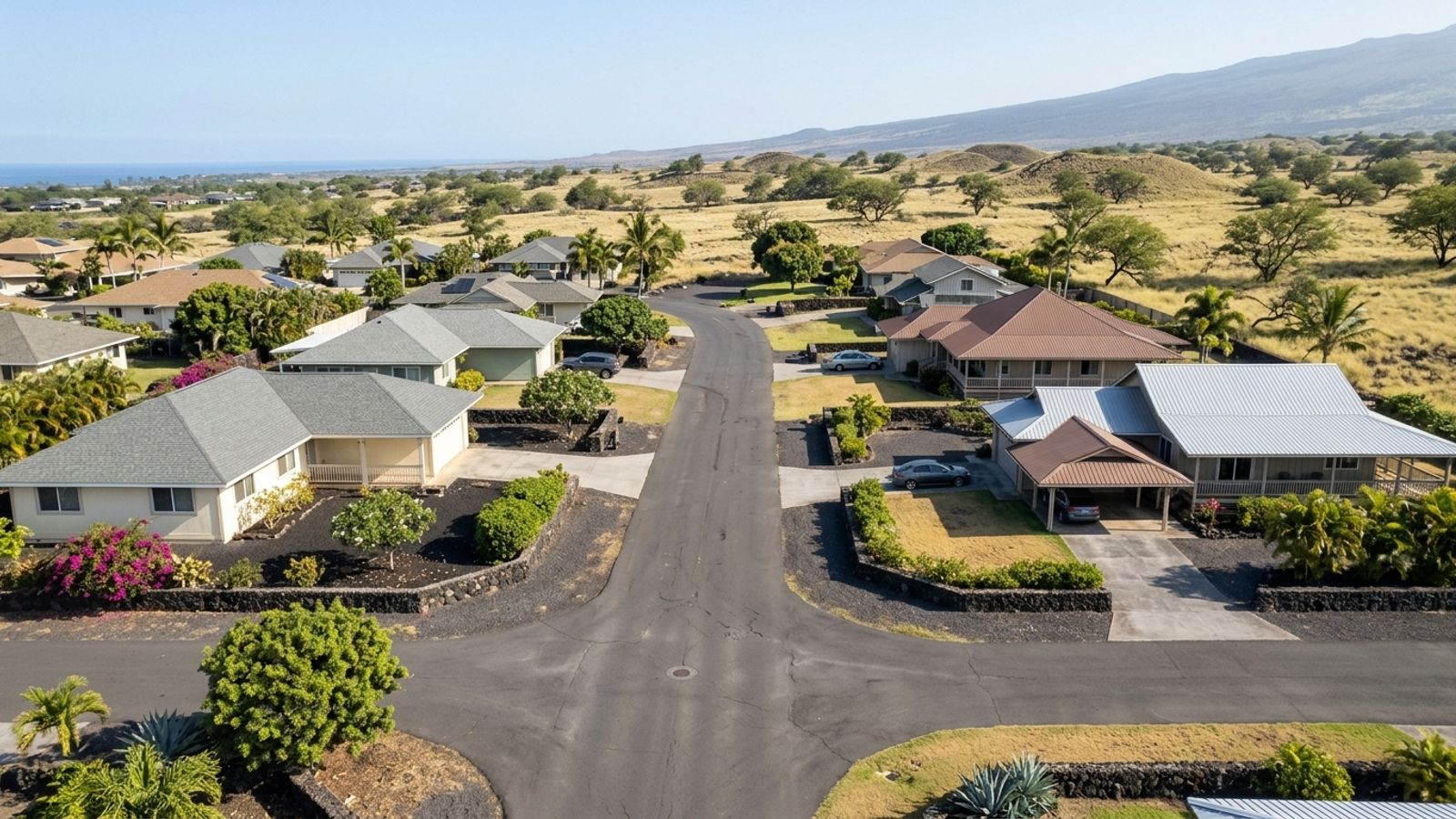
Waikoloa homes recently sat on the market for a median of 85 days, closing just under list price. During the 90 days ending September 30, 2026, the area saw 9.9 months of supply build up across all property types. That's negotiating room, and it matters more here than in most markets because the numbers on a rental only work if you buy right.
Renting out a house in Waikoloa involves firm state deadlines, county tax classifications, and association rules that dictate what you can lease and for how long. The buyers who make it work run the numbers on long-term rent before they write an offer, not after.
Key Takeaway
Becoming a landlord in Waikoloa works best when you buy for the rent rather than appreciation. With roughly 9.9 months of supply across all homes during the 90 days ending September 30, 2026, buyers have the negotiating power to reach a price that long-term rent can carry. Condos and townhomes give you the most room to negotiate, while a single-family home costs more but sells faster and avoids association leasing limits.
Who This Guide Is For
You own or are about to buy a Waikoloa property and are deciding whether renting it to long-term tenants will cover its costs and what you must set up before the first lease.
Does a Waikoloa Rental Make Financial Sense?
A landlord's return in Waikoloa gets decided at purchase, not at lease signing. During the 90 days ending September 30, 2026, the 22 homes sold in the area closed at a median 96.9% of list price after roughly 85 days on the market. Closing about 3% under list after nearly three months on market means offers below asking are normal and worth making. Listings that have sat past that 85-day median are the ones where sellers are most open to it.
The median sale price showed a 14.2% year-over-year gain, but that figure rests on just 22 sales and can swing based on which specific homes happened to close. Underwrite your purchase on the rent the property can generate, not on expected appreciation. A slow market also means a slower exit when you decide to sell, which is worth factoring in from the start. The strategies for real estate investing in Waikoloa, HI depend on your timeline; our breakdown details these options.
Condo or Single-Family Home for a First Rental?
Choosing between an attached unit and a detached house comes down to negotiating room versus control. Single-family homes make up 38 of the 72 active listings but accounted for 18 of the 22 recent sales. That leaves roughly 34 condo and townhome listings competing against about four such sales over a 90-day period.
Because attached homes outnumber their recent sales by that kind of margin, condos and townhomes give you the most room to push the purchase price down to what rent can carry. Single-family homes carry a higher entry price and a tighter 6.5 months of supply, but they turn over faster and answer to fewer leasing rules.
What to Check Before You Write an Offer on a Condo or Townhome
Ask the HOA or managing agent for the CC&Rs, house rules, and any rental registration forms before you make an offer on an attached unit. Confirm the minimum lease term, any cap on rented units, current monthly dues, the latest reserve study, and any pending special assessments. For a single-family home in Waikoloa Village, read the community association's covenants for leasing and accessory-unit rules.
The cheapest entry point, a condo, is also where the HOA can cap rentals and raise dues you can't control. Know that going in.
Does a Waikoloa Rental Pay for Itself? A Practical Example
The median sale price for all Waikoloa homes was $942,051 over the 90 days ending September 30, 2026. For illustration only: assuming a 25% down payment on that median price, your monthly cost begins with the mortgage. As of late October 2026, the 30-year fixed-rate mortgage averages 7.24%.
Ask a lender for the minimum down payment and current rate on an investment-property loan, as these typically run higher than owner-occupied rates. You can review how to finance a rental property to compare loan types. You'll also need an insurance quote for a landlord policy that specifies hurricane coverage and accounts for the property's lava hazard zone.
Property Taxes and GET
For FY2026-27, Hawai'i County taxes non-owner-occupied residential properties at $11.10 per $1,000 of net taxable value up to $2,000,000. Check the parcel's current tax class and assessed value in county records to estimate that bill. You'll also need to account for Hawaii's General Excise Tax on gross rent, which is 4.5% in Hawai'i County for 2026, plus HOA dues, a maintenance allowance, and about one month's rent per year for vacancy.
What Rent Can You Expect?
HUD's FY2026 Fair Market Rent for a three-bedroom unit in Hawai'i County is $3,220. That's a cautious proxy. Confirm current asking rents for comparable Waikoloa homes with a local property manager before you run your final numbers. At median prices, long-term rent alone may not cover a financed purchase, meaning your down payment or a lower negotiated purchase price has to close the monthly gap.
Hawaii Landlord-Tenant Laws You Need to Know
Hawaii regulates residential leases through the Residential Landlord-Tenant Code, found in HRS Chapter 521. Landlords may charge a security deposit of no more than one month's rent, plus an optional pet deposit of up to one month's rent for tenants with pets.
State law gives landlords exactly 14 days after a rental agreement terminates to return the deposit or provide an itemized statement of deductions. Miss that deadline and you forfeit your right to keep any part of it. You must also provide a written inventory of the unit's condition at move-in and give at least two days' notice before entering for non-emergency reasons.
Rent increases on a month-to-month tenancy require at least 45 days' written notice. Ending that tenancy requires 45 days' notice from the landlord. Evictions run through a District Court summary possession process. State deadlines are firm and easy to miss from off-island, so have a Hawaii attorney review your lease before the first tenant signs.
Finding and Screening Tenants
Screening applicants requires a written policy applied consistently to each applicant. Your criteria should rely on a verified income-to-rent ratio, credit history, rental history, and references. Federal and Hawaii Fair Housing laws prohibit screening based on protected classes, so you can't make decisions based on household makeup, source of income, or any other protected trait.
Most Waikoloa listings reach renters through general rental listing sites and the local networks of property managers. West Hawaii renters often commute to resort and service jobs along the coast, so check that your asking rent fits verifiable local incomes, or you can expect longer vacancies.
Managing a Waikoloa Rental from Off-Island
Hawaii requires any landlord who lives off-island to designate an agent residing on the same island to act on their behalf. This rule applies whether you live on the mainland or just on a different Hawaiian island. Self-managing is realistic only if you live on the Big Island and can personally handle repairs, showings, and the 14-day deposit return deadline.
Most off-island owners hire a licensed property manager. Request a written fee schedule, including leasing charges, renewal fees, and any maintenance markup. A manager's monthly fee and placement charges come straight out of your margin, which may already be thin if you financed the purchase at median prices. Furnishing and managing a short-term rental involves a different setup than a standard 12-month lease, so factor that in before you choose a strategy.
Long-Term Rental or Vacation Rental?
A 12-month lease brings steadier income and lighter tax filing requirements than a nightly vacation rental. Short-term stays are only legal where zoning and association rules specifically allow them, and stays under the 180-day threshold trigger the state's transient accommodations tax.
You can review where short-term rentals are allowed and compare short-term versus long-term rental returns before settling on a strategy. Specific short-term rental regulations and transient accommodations tax rules can alter your return if you ever transition the property from a vacation rental to a standard lease.
How to Decide If a Waikoloa Rental Fits Your Plan
Run your specific numbers and read the fine print. These four questions will tell you whether a property makes sense as a rental:
- Will the rent cover the mortgage, property tax, insurance, and HOA dues at the price you can realistically negotiate? Run your numbers through the worked example above.
- Does the association allow the rental you plan, and at what minimum lease term? Check the condo versus single-family trade-offs before you write an offer.
- Will you live off-island while tenants are in the home? If so, you must meet the on-island agent requirement and decide between self-managing or hiring help.
- Would nightly or monthly vacation rates suit you better than a 12-month lease? Review the local zoning and regulation limits to see what's legal for your lot.
If you want to see how these numbers look in practice, I can pull rent comps and HOA leasing rules on specific Waikoloa listings you're considering.
At a Glance
- Median sale price, all homes: $942,051, up 14.2% year over year (90 days ending Sep 30, 2026; based on 22 sales, so treat with caution)
- Median sale price, single-family: $1,119,554, up 16% year over year (90 days ending Sep 30, 2026; based on 18 sales)
- Median days on market: 85 for all homes, 99 for single-family (90 days ending Sep 30, 2026)
- Sale-to-list ratio: 96.9% for all homes, 97.2% for single-family (90 days ending Sep 30, 2026)
- Share sold above list: 9.1% of all homes, 5.6% of single-family (90 days ending Sep 30, 2026; small samples)
- Months of supply: 9.9 for all homes, 6.5 for single-family (90 days ending Sep 30, 2026)
- Active inventory: 72 homes of all types, 38 of them single-family (90 days ending Sep 30, 2026)
- Median price per square foot: $630 for all homes, $658 for single-family (90 days ending Sep 30, 2026)
Becoming a Landlord in Waikoloa FAQs
How Much Money Does It Take to Become a Landlord in Waikoloa?
The upfront cash includes your down payment, closing costs, and cash reserves for vacancy and repairs. Ask a lender for the required down payment on an investment loan and request a written estimate for closing costs. The total scales with the property's purchase price, which you can estimate using the median sale price in the at-a-glance list above.
Do I Need a License to Rent Out a Property in Hawaii?
Yes, anyone receiving rental income must register with the Department of Taxation by completing the Basic Business Application and paying a one-time $20 license fee. For local property taxes, Hawai'i County also requires owners to file a Long-Term Rental application annually by December 31 to claim the specific LTR tax classification. Any short-term rental activity disqualifies the property from this county classification.
Does a Long-Term Rental in Waikoloa Pay Transient Accommodations Tax?
No, the state's Transient Accommodations Tax only applies to rental proceeds from accommodations rented for less than 180 consecutive days. If you lease the home for shorter stays, you must pay the 11% state rate plus Hawai'i County's local TAT surcharge. You can review local short-term rental regulations for the exact tax filing requirements on short stays.
How Much Does Property Management Cost in Waikoloa?
Property managers typically charge a monthly management percentage, a tenant placement or leasing fee, lease renewal fees, and a maintenance markup on repairs. No official standard dictates these rates, so costs vary by company. Request written fee schedules from two or three licensed West Hawaii managers to compare their total charges.
Can I Rent My Waikoloa Property to Tenants with Section 8 Vouchers?
Yes, and Hawaii law prohibits landlords from refusing to rent to an applicant solely because they use a Section 8 Housing Choice Voucher. Under a state law that took effect in 2023, you can't publish discriminatory advertising stating that a property doesn't accept vouchers. The Hawai'i County Office of Housing administers the local voucher program and sets the specific payment standards for the area.
How Long Does an Eviction Take in Hawaii?
The timeline depends on the court's schedule and the specific reason for eviction. For nonpayment of rent, a landlord must provide a written notice giving the tenant at least 10 calendar days to pay, while simultaneously sending a copy to a state-funded mediation center. If the tenant schedules mediation, the landlord generally can't file for summary possession in District Court until 20 calendar days after the tenant received the notice. Consult a Hawaii attorney for exact timing.
Can I Add an Ohana Unit or ADU on a Waikoloa Lot to Rent Out?
Hawai'i County law allows up to three accessory dwelling units per residential or agricultural lot for long-term housing. The Waikōloa Village Association's covenants, though, require committee approval for exterior buildings and restrict accessory outbuildings from being used for human habitation before a primary dwelling exists. Confirm the specific lot's zoning and community covenants before buying a property for this purpose.
Which Property Tax Class Applies to a Long-Term Rental in Waikoloa?
A non-owner-occupied rental doesn't qualify for the standard homeowner tax class or exemption. It falls into the standard Residential class unless you apply for the county's specific Long-Term Rental classification. You must file the Long-Term Rental application annually by December 31 to receive that specific rate for properties leased to the same tenant for more than 180 consecutive days.
Sources
- Redfin: Data Center
- Hawaii State Legislature: HRS 521-44
- Hawaii State Legislature: HRS 521-53
- Hawaii State Legislature: HRS 521-43
- Hawaii Department of Taxation: Licensing
- Hawaii Department of Taxation: Tax Facts
- Hawaii Magazine: Transient Accommodations Tax
- Big Island Now: Property Tax Rates
- Hawaii Property Tax: LTR Application
- BnBCalc: HUD Fair Market Rent
- Hawaii State Legislature: HRS 521-68
- Hawaii State Legislature: Act 310
- Hawaii Public Radio: ADU Law
- Waikoloa Village Association: The Association
- Freddie Mac: PMMS
Leave a Reply

Agent RS 83053