
Blog > Real Estate Investing in Waikoloa, HI: 2026 Market and Strategy
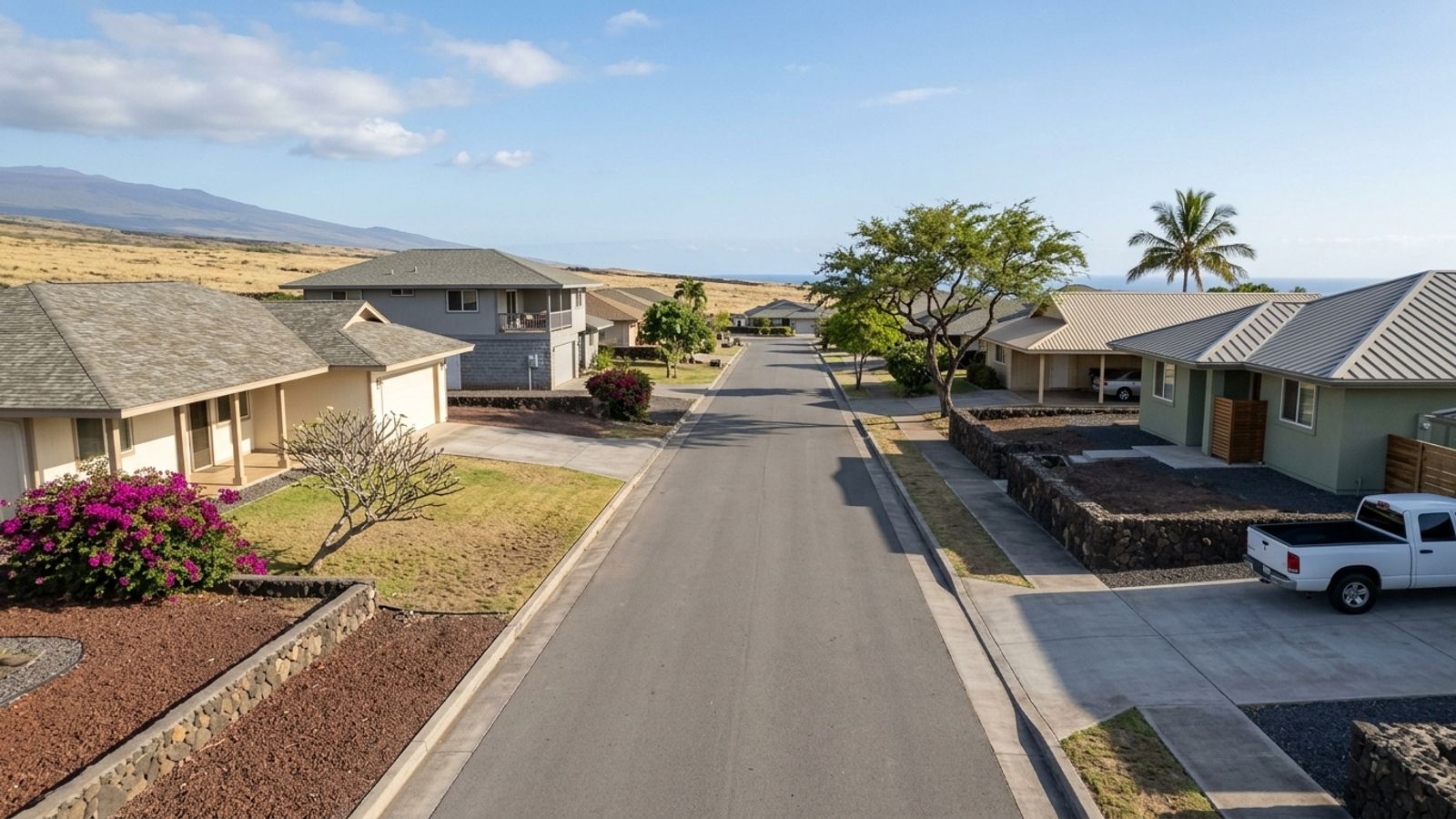
Waikoloa's market is showing a 14.2% jump in the median sale price (based on 22 sales), which has reached $942,051. That gain rests on just 22 sales in the 90 days ending September 30, 2026, so treat it with caution.
Key Takeaway
Waikoloa currently rewards investors who negotiate rather than chase appreciation, as the market held 9.9 months of supply in the 90 days ending September 30, 2026. If you want vacation rental income, start with condos in Waikoloa Beach Resort after confirming each unit's legal rental status. If you prefer steady tenants and a simpler rulebook, single-family homes in Waikoloa Village are the alternative at a higher entry price.
Who This Guide Is For
You're considering buying a Waikoloa property as a rental or long-term hold and need to figure out which property type and strategy fit your budget and the rules that will govern it.
Waikoloa Real Estate Market for Investors
The price headline is thin, but the supply picture is not, and it gives buyers significant room to negotiate, especially in condos and townhomes. The full figures are in the at-a-glance list below; here is what each means for your offer.
For the bigger picture, see Homepage.
That much unsold inventory lets you negotiate terms, ask for credits and avoid bidding wars on most properties.
Prices Rose on Very Few Sales
The median's rise rests on just 22 sales, so one or two resort or golf-frontage closings can move it on their own. Underwrite your purchase at today's price with no appreciation built in. Next quarter could show a drop that says nothing about your unit's value.
Homes Are Selling Below List Price
Sellers are, on balance, accepting less than asking. Across all home types, the sale-to-list ratio was 96.9%, so bidding wars are rare.
That gives you room to open below list and ask for credits on inspection findings. Roughly one sale in eleven still went over asking, typically for well-priced, rental-ready units.
Condos and Townhomes Have the Most Listings per Sale
In the quarter ending September 30, 2026, roughly 34 Waikoloa condos and townhomes were listed against about four that sold. This is where a buyer's negotiating room is likely the greatest.
A crowded segment can mean buyers are avoiding something specific, such as rising dues or a pending assessment. Four sales is too few to price from with confidence, so ask the HOA for its reserve study and any planned special assessments before treating a discount as a bargain.
How to Narrow Your Investment Options
Your income plan and budget narrow the search quickly.
If your plan depends on nightly guest income, read "Short-term rental rules in Hawaii County" and the Waikoloa Beach Resort profile first. If it doesn't, skip to "Single-family long-term rentals" and the Waikoloa Village profile.
If your budget is near the single-family median, look at Village houses and the single-family example in "How to analyze a Waikoloa rental property." If it is well below, condos and townhomes, covered under "Vacation rental condos," are the realistic option.
If the deal works only with continued price growth, read "Prices rose on very few sales" before relying on the trend. If you're funding the purchase from the sale of another property or buying from outside Hawaii, read "1031 exchanges and HARPTA" before you make an offer.
Where to Invest in Waikoloa
The real choice for an investor is between resort-zoned property built for visitors and an upslope residential community built for residents. Zoning decides how you can legally rent each one, and location sets both the ceiling on gross income and your operating costs.
Waikoloa Beach Resort
Parcels within Waikoloa Beach Resort are zoned under the County's Resort-Hotel (V) zoning district. That resort zoning is the usual basis for legal vacation rental use.
The area offers condos, townhome-style villas, and golf or resort-adjacent units near Anaeho'omalu Bay. Building rules still vary, so check where short-term rentals are allowed address by address.
The downside is that you're competing with many near-identical units for the same guests. HOA dues plus master-policy insurance can absorb much of the nightly-rate advantage. Before you model any returns, ask the HOA for current dues, what they cover, and the last two years of increases.
Waikoloa Village
This is the long-term rental side of Waikoloa, where tenants rather than guests drive returns. It's primarily single-family homes plus some condo and townhome projects. The Village sits at an elevation of 410 feet, roughly a 15 to 20-minute drive downhill to the coastal resort areas.
Hawaii County limits new non-owner-occupied short-term rentals in residential zones. A Village house bought on Airbnb projections may not be legally usable for short-term stays (see the certificate rule below). Owners also pay Waikoloa Village Association assessments of $1,120 for 2026 on top of any individual project HOA fees.
Short-Term vs Long-Term Rentals in Waikoloa
The core trade-off is higher gross income with heavier rules and costs, or steadier income with a higher entry price. Vacation rentals earn more per night but carry significant operating expenses and close county oversight. Long-term leases offer predictable monthly cash flow and lower turnover costs.
Vacation Rental Condos
Gross potential depends entirely on legal status, HOA rules and the unit's occupancy rate. Airbnb revenue, occupancy and lodging taxes data give you a starting estimate of top-line income.
Professional management, cleaning, furnishings refresh, and state general excise and transient accommodations taxes all come off the top. A unit that looks strong on gross revenue can net less than a long-term lease. When buying a short-term rental, ask the seller for the unit's booking history and tax filings rather than a projection.
Single-Family Long-Term Rentals
Single-family homes had 6.5 months of supply in the 90 days ending September 30, 2026. Houses are the tighter segment, so there's less discount room than with condos.
In exchange, leases of 30 days or more sidestep the short-term rental ordinance entirely, letting you draw on resort-workforce housing demand. At Waikoloa house prices, though, market rent rarely covers a financed purchase on its own, which is the main cost to weigh when you compare short-term vs long-term rental returns. Many single-family rentals here work as a long hold with thin or negative cash flow, so test the numbers before assuming income will carry the property.
How to Analyze a Waikoloa Rental Property
Cap rate is your net operating income (NOI) divided by the purchase price, and it measures your expected annual return before financing. Cash flow is what remains after the loan payment.
Testing an Offer at the Single-Family Median
The single-family median sale price was $1,119,554, based on 18 sales. Applying the single-family sale-to-list ratio of 97.2% gives an illustrative closing price of roughly $1,088,200.
Fannie Mae sets a minimum 15% down payment requirement for a single-unit investment property, which dictates the cash you need at closing before costs. Loan terms beyond that minimum vary, so compare options for financing an investment property.
To find NOI, take your projected annual rent and subtract property taxes, insurance, association dues, maintenance and vacancy. That median rests on so few sales, and the property you buy won't be the median. Rerun the math with the real list price, local rent comparables, and real insurance and HOA quotes.
Carrying Costs to Budget
Hawaii County taxes by property class, and a rental is not taxed at the homeowner rate. For the 2026 to 2027 fiscal year, the Long Term Rental rate is $7.75 per $1,000 of net taxable value, while the Hotel/Resort rate is $11.55.
Get an insurance quote before you offer, paying close attention to the lava-zone rating. Budget reserves for salt air and sun wear on exteriors. If you hire help, also factor in the costs of furnishing and managing a rental.
Insurance and association dues are the two costs most likely to change after you close. Ask the HOA about its master policy renewal date and any increases already voted on.
Rules and Taxes for Waikoloa Investors
County zoning decides whether a rental is legal, state law governs your tenants, and tax rules set the cost of buying and selling. Getting them wrong can mean fines, lost security deposits or delayed closing funds.
Short-Term Rental Rules in Hawaii County
Hawaii County regulates vacation rentals by zoning and requires registration or nonconforming use certification outside resort and commercial areas. Owners of rentals operating outside permitted zoning districts before July 20, 2018, were required to apply for a Nonconforming Use Certificate.
A certificate or registration may not transfer the way a buyer expects. Before you count on nightly income, check the short-term rental regulations, confirm the property's status with the County Planning Department and read the CC&Rs.
Hawaii Landlord-Tenant Law
For long-term rentals, the state Residential Landlord-Tenant Code sets security deposit limits, notice periods and entry rules. If you propose to keep any part of a deposit, specific notice and accounting procedures apply. If a landlord wrongfully and willfully retains a deposit, a court may award the tenant three times the amount wrongfully retained plus the cost of the suit.
These rules run on fixed deadlines, and missing one can cost you the right to keep any of the deposit. Remote owners usually hire a licensed property manager. Have a manager or attorney review your lease template before you sign your first tenant.
1031 Exchanges and HARPTA
A 1031 exchange defers capital gains only if you meet two deadlines. You must identify the replacement property within 45 days after transferring the relinquished property. You must then complete the exchange by the 180th day after that transfer or, if earlier, the due date of your tax return for that year, including extensions.
When you eventually sell, the Hawaii Real Property Tax Act (HARPTA) requires withholding on sales by nonresident sellers. That withholding comes out of your gross sale price at closing, not your profit. Without an exemption or waiver filed in advance, a large share of your cash can be tied up until you file a return. Consult a qualified intermediary and a CPA to handle these filings.
The information provided here is for educational purposes and does not constitute financial, legal, or tax advice.
Next Steps for Buying a Waikoloa Investment Property
Use the 85-day median time on market as your final negotiating cue. Ask the listing agent how long the property has sat and whether it's had price cuts.
Before you write an offer, check in this order: rental status, HOA documents, then an insurance quote. Remote buyers can request video walkthroughs and investor-focused representation to evaluate properties from afar.
You can connect with an investor-friendly real estate agent to start analyzing specific listings.
At a Glance
- Median sale price, all homes: $942,051 (90 days ending 2026-09-30; based on 22 sales)
- Year-over-year change in median sale price, all homes: +14.2% (90 days ending 2026-09-30; based on 22 sales)
- Homes sold, all homes: 22 (90 days ending 2026-09-30)
- Median days on market, all homes: 85 (90 days ending 2026-09-30; based on 22 sales)
- Sale-to-list ratio, all homes: 96.9% (90 days ending 2026-09-30; based on 22 sales)
- Share sold above list, all homes: 9.1% (90 days ending 2026-09-30; based on 22 sales)
- Months of supply, all homes: 9.9 (90 days ending 2026-09-30)
- Active inventory, all homes: 72 (90 days ending 2026-09-30)
- Median price per square foot, all homes: $630 (90 days ending 2026-09-30; based on 22 sales)
- Median sale price, single-family homes: $1,119,554 (90 days ending 2026-09-30; based on 18 sales)
- Year-over-year change in median sale price, single-family homes: +16% (90 days ending 2026-09-30; based on 18 sales)
- Homes sold, single-family homes: 18 (90 days ending 2026-09-30)
- Median days on market, single-family homes: 99 (90 days ending 2026-09-30; based on 18 sales)
- Sale-to-list ratio, single-family homes: 97.2% (90 days ending 2026-09-30; based on 18 sales)
- Share sold above list, single-family homes: 5.6% (90 days ending 2026-09-30; based on 18 sales)
- Months of supply, single-family homes: 6.5 (90 days ending 2026-09-30)
- Active inventory, single-family homes: 38 (90 days ending 2026-09-30)
- Median price per square foot, single-family homes: $658 (90 days ending 2026-09-30; based on 18 sales)
Waikoloa Real Estate Investing FAQs
What County Is Waikoloa, HI In?
Waikoloa is in Hawaii County, on Hawaii Island. The county sets real property tax rates by class and administers vacation rental rules.
Is Waikoloa Village in Kona?
No, Waikoloa Village is located within the South Kohala District of Hawaii County. Listings and guests often group it with the Kona or Kohala Coast market, but it's a distinct area.
How Much Cash Do I Need Beyond the Down Payment to Close on a Waikoloa Investment Property?
Closing costs and lender-required cash reserves add to the 15% minimum down payment required for a single-unit investment property. Get a loan estimate early so you know the full amount needed at closing.
Do Waikoloa Condo Associations Allow Vacation Rentals?
It depends on the specific project, and an HOA can enforce rules that are stricter than county law. Read the CC&Rs and house rules for minimum stay lengths, and ask the managing agent in writing before assuming you can rent by the night.
Which Taxes Apply to Nightly Rental Income?
Operators pay the state general excise tax (GET) on gross proceeds and the state transient accommodations tax (TAT), which increased to 11% effective January 1, 2026. Counties may also establish a separate county TAT by ordinance, and you'll need a GET/TAT license to operate.
Is Waikoloa in a Lava Zone?
Yes. All of Hawaii Island is mapped into nine USGS lava flow hazard zones based on vent locations, past coverage and topography, but the official map gives no single zone number for the whole Waikoloa area. Confirm the zone for your specific parcel before you request insurance quotes.
Sources
- Redfin: Data Center
- Hawai'i County Short-Term Vacation Rental Ordinance
- Hawai'i County Leeward Planning Commission Rezoning Notices
- Hawai'i County Real Property Tax Rates
- Hawaii State Legislature: HRS Chapter 237
- Hawaii State Legislature: HRS Chapter 521
- US Code: IRC Section 1031
- USGS: Map Showing Lava-Flow Hazard Zones, Island of Hawaii
- Wikipedia: Waikoloa Village, Hawaii
- Wikipedia: Waikoloa
- Chase: Financing a Second Home
- Waikōloa Village Association: Make a Payment
Leave a Reply

Agent RS 83053