
Blog > Short-Term vs Long-Term Rental in Waikoloa, HI: Net ROI
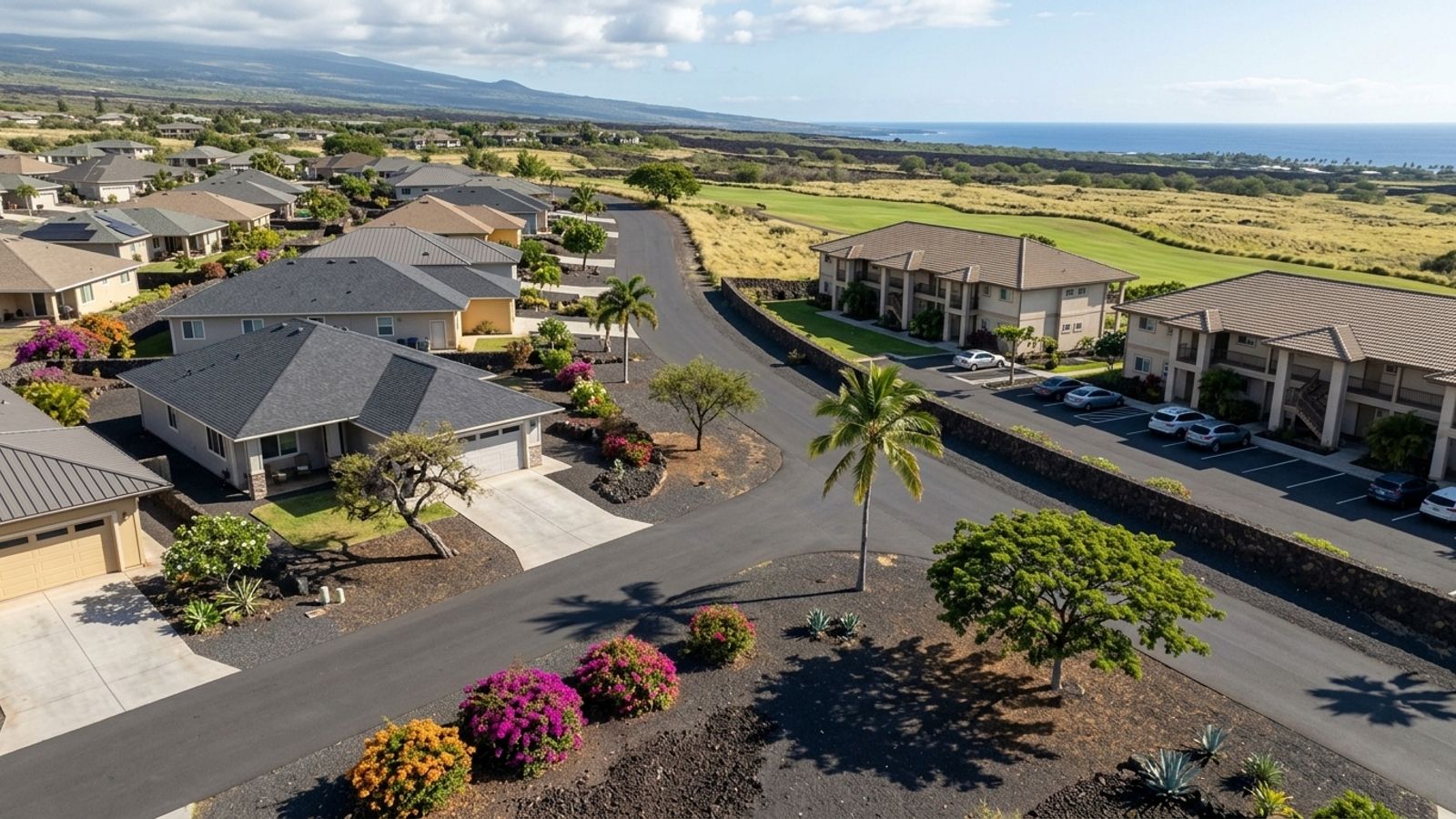
The median sale price for a home in the Waikoloa Village area sits around $784,981 right now. Properties are spending roughly 98 days on the market, and there are about 77 homes available - so you have real time to think this through before committing to buying a short-term rental in Waikoloa, HI or a long-term investment property.
And the decision you need to think through first isn't which property. It's how you plan to rent it. The choice between a short-term vs long-term rental in Waikoloa, HI shapes everything from your daily management duties to your tax liabilities and county compliance. Both models have distinct financial profiles, and the right one depends on your revenue goals and how much turnover you're willing to manage.
Defining the Rental Options in Waikoloa
The local market serves two very different tenant bases - visitors looking for a few nights on the Kohala Coast, and island residents who need a real home. Those two groups require completely different versions of you as a landlord.
The operational rhythm of each model is what trips people up. The choice goes beyond which earns more on paper. It depends on whether you want to run something closer to a hotel or closer to a traditional investment property.
The Short-Term Strategy
A short-term vacation rental (STVR) means leasing a furnished property for fewer than 30 consecutive days. In Hawaii County, you're primarily serving tourists, and that means active, ongoing guest communication - not something you set up and walk away from.
Owners focus on maximizing nightly rates during peak travel seasons, which requires frequent cleanings, constant marketing, and immediate attention to maintenance requests between stays. It's a business that happens to involve real estate, not the other way around.
The Long-Term Lease Model
A long-term rental means leasing to the same tenant for six months or more, usually on an annual contract. You get predictable monthly cash flow without the constant pressure to fill your calendar.
Tenants furnish the space themselves and handle basic upkeep, which takes a significant amount of day-to-day management off your plate. The tradeoff is straightforward: your revenue has a fixed ceiling for the life of the lease, and you can't capture a spike in demand the way a vacation rental can.
Revenue and Return on Investment in Waikoloa
Gross income looks dramatically different depending on which model you choose. Vacation stays command a premium nightly rate, but they also come with vacancy periods that an annual lease simply doesn't have. You have to look at both the top-line number and how consistently it shows up.
Nightly Rates vs. Monthly Rent
Waikoloa STVRs average a daily rate of about $480, with some sub-areas ranging from $364 to $569 per night. That's the number that gets attention.
Long-term monthly rent averages roughly $2,887 to $3,087 across property types in the area - which translates to about $95 to $100 per night. So yes, the short-term nightly rate runs three to five times higher. But vacation rentals also carry higher operating costs, and that gap narrows considerably once you account for them.
Occupancy Rate Expectations
Waikoloa vacation rentals are seasonal. Peak demand runs January through March, with February typically at the top. July is usually the slowest month.
During peak winter season, short-term rentals average a 66.8% occupancy rate and can generate around $7,547 per month in revenue - and those are genuinely strong numbers. The catch is the annual average occupancy rate, which hovers around 43%. That means the property sits empty for more than half the year. A long-term lease doesn't have that problem.
Local Regulations and Zoning Laws
Hawaii County has strict zoning codes governing where and how vacation rentals can operate, and this is the piece that catches investors off guard most often. You have to verify a property's zoning before you assume it can be used for short-term stays.
Operating an illegal rental carries heavy fines - this isn't a gray area. Long-term leases face far fewer zoning hurdles, but they do require you to follow standard state landlord-tenant laws throughout the tenancy.
Hawaii County Permits and Zoning
Hawaii County regulates STVRs under Ordinance 2018-114 (Bill 108), which defines them as units with no more than five bedrooms rented for 30 consecutive days or less where the owner does not reside on site. New STVRs are limited to specific zones - V, CG, and CV districts, resort nodes, and RM zoning for condominiums.
The regulatory framework expanded with Bill 47 (Ordinance 25-50), which took effect on December 20, 2025. This law requires registration for hosted bed-and-breakfasts as well, and it governs rentals under 180 consecutive days. Registration fees are set at $500 for the initial unhosted STVR permit and $250 for annual renewals.
HOA Restrictions and Landlord-Tenant Compliance
County zoning is only part of the picture. Many properties in the area sit within Homeowners Associations that enforce their own rental rules - and some HOAs prohibit stays under 30 days entirely, regardless of what the county allows. You need to check both before you close.
For annual leases, Hawaii's landlord-tenant codes govern security deposits, eviction procedures, and property maintenance. Those laws protect both parties and keep the process standardized, but they're not optional.
Daily Management Logistics
Running a vacation rental is a hospitality business. Running an annual lease is a real estate investment. That distinction matters more than most buyers expect when they're still in the spreadsheet phase.
Either way, you're deciding how much time you want to spend on property oversight - or how much of your gross income you're willing to hand over to someone who'll do it for you.
Turnover, Cleaning, and Maintenance
Short-term units take a beating. Constant guest turnover means coordinating professional cleaning multiple times a week and regularly replacing linens, toiletries, and whatever guests manage to damage. It adds up.
Long-term units turn over once a year, maybe every few years. The tenant handles routine cleaning, and your role is limited to major repairs or appliance failures. It's a quieter operation by almost every measure.
Property Management Fees
Vacation rentals require constant booking management, guest communication, and cleaning coordination - so property managers charge higher percentages for the work. That fee comes directly out of the higher gross revenue that STVRs generate, and it can close the gap between the two models faster than people expect.
Long-term property managers typically charge a lower monthly percentage because the workload is limited to collecting rent and handling occasional maintenance calls. Run your profit projections using actual local management rates before you decide which model pencils out for you.
Frequently Asked Questions
Which generates higher revenue: Short-Term vs Long-Term Rental in Waikoloa, HI?
It depends on how you measure it. Short-term rentals generate higher gross income - average daily rates around $480 compared to the $95 to $100 per night equivalent of a long-term lease. But short-term rentals also average just 43% annual occupancy and carry higher operating costs, so the net comparison is closer than the headline numbers suggest.
What are the local zoning laws for Short-Term vs Long-Term Rental in Waikoloa, HI?
Long-term rentals are broadly permitted across residential zones. Short-term rentals face strict county limits. Under Hawaii County Ordinance 2018-114, new unhosted vacation rentals are only permitted in specific resort nodes, commercial districts, and RM-zoned condominiums.
How do property management fees differ for Short-Term vs Long-Term Rental in Waikoloa, HI?
Fees are consistently higher for short-term vacation rentals, reflecting the increased workload of marketing, frequent guest turnover, and coordinating multiple cleanings per week. Long-term management requires less daily oversight, which translates to a lower percentage fee.
How do Hawaii's GET and TAT taxes impact the net income of short-term versus long-term rentals in Waikoloa?
Both rental types require owners to pay state taxes on gross income. Short-term rentals face additional transient accommodation taxes that long-term leases don't, which cuts into the higher gross revenue generated by nightly rates.
Do all homeowner associations in Waikoloa Beach Resort and Waikoloa Village allow short-term vacation rentals?
No. Even if a property sits within a county-approved zoning district, individual Homeowners Associations can enforce stricter rules. Many HOAs prohibit leases under 30 days entirely, so you need to verify the specific community bylaws before you buy - not after.
How long does it take to get an STVR permit approved in Waikoloa compared to starting a standard long-term lease?
Much longer. Historical data shows that processing a short-term vacation rental permit under the county's framework takes about 60 to 90 days. A standard long-term lease can begin as soon as you secure a qualified tenant.
Is there enough year-round local tenant demand to justify choosing a long-term rental over a vacation property in Waikoloa, HI?
Yes. Demand for long-term housing is steady, with monthly rents in the Waikoloa Village area averaging $2,887 to $3,087. While vacation rentals peak in the winter and slow in the summer, an annual lease gives you consistent, year-round occupancy without the seasonal swings.
Leave a Reply

Agent RS 83053