
Blog > Financing a Short-Term Rental in Waikoloa, HI: Loan Types and 2026 Rules
Financing a Short-Term Rental in Waikoloa, HI: Loan Types and 2026 Rules
by
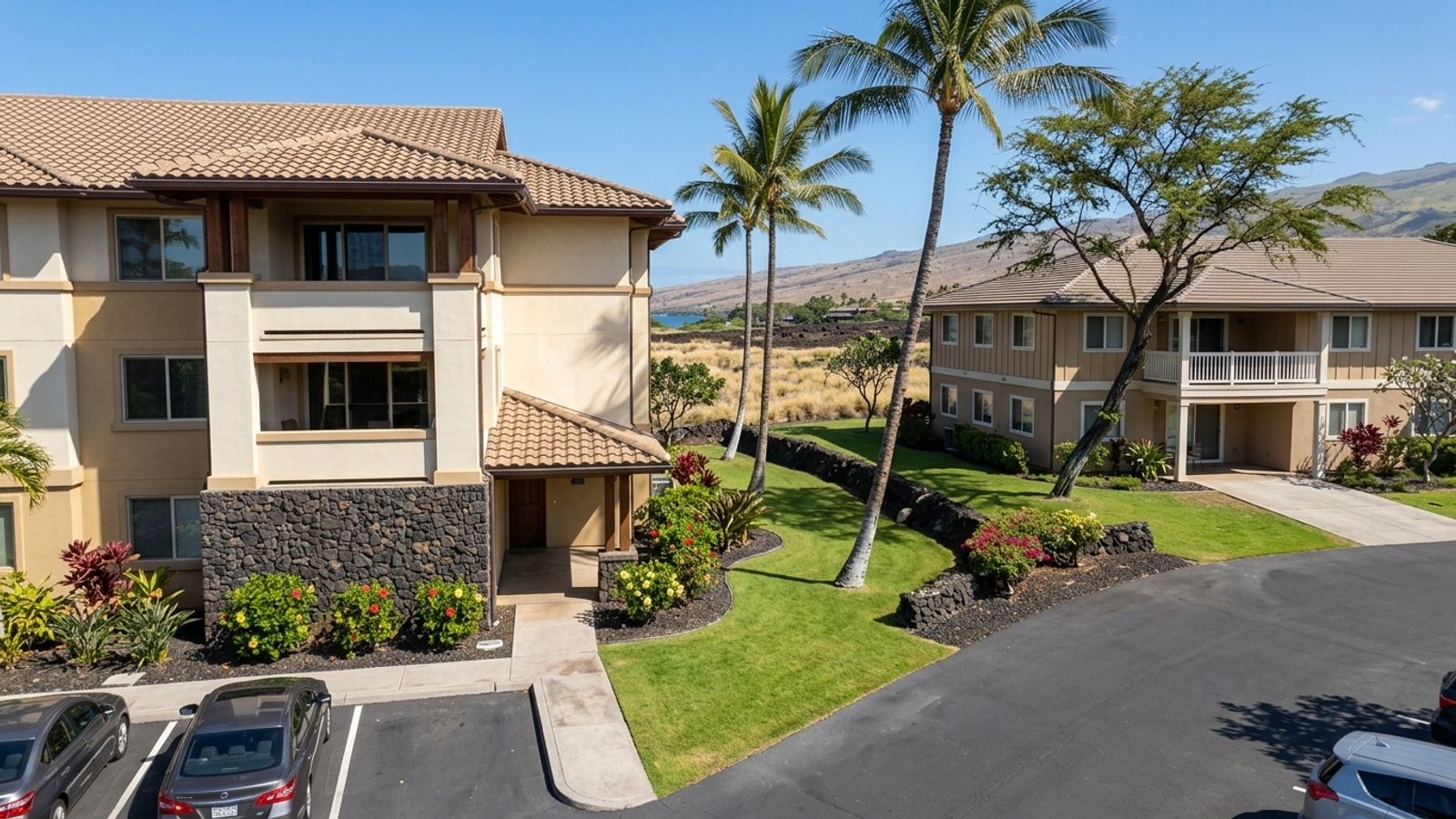
The median sale price in Waikoloa Village is currently around $785,000, with homes sitting on the market for roughly 98 days. If you're focused on buying a short-term rental in Waikoloa, you're probably already looking at the resort nodes - Waikoloa Beach Resort in particular - where pricing and zoning rules work differently than in the surrounding residential neighborhoods. And the financing works differently too. Short-term rental loans in Waikoloa carry underwriting standards that have little in common with a standard primary residence mortgage.
Getting Airbnb financing in Waikoloa, HI means getting clear on two things at once: the financial products available to you and the local laws that govern what you can do with the property. Lenders will look hard at your projected rental income, your down payment size, and the property's legal zoning status before they say yes. Knowing which mortgage types align with Hawaii County's specific short-term vacation rental (STVR) regulations before you start shopping saves you a lot of wasted energy.
Top Loan Options for Waikoloa Investment Properties
Most lenders want a minimum of 20% to 25% down for a dedicated investment property. From there, you're generally choosing between conventional loans, specialized investor products, or second-home mortgages.
What all of these have in common is that you need to convince the bank the property can generate reliable income - or that your personal finances can cover the payments whether it does or not. Lenders treat investment properties as higher risk than primary homes, so interest rates on these loans typically run above standard owner-occupied mortgages. That spread matters when you're running cash flow projections.
Before you can match your financial profile to a loan structure, you need to survive the documentation process. Underwriters will go through your debt-to-income (DTI) ratio, credit history, and cash reserves. They want to see that a stretch of vacancy won't put you underwater.
Conventional Investment Property Loans
Backed by Fannie Mae and Freddie Mac, conventional investment loans are the default choice for buyers with strong personal income. They generally offer the most favorable interest rates in the investment product category, but you'll need a solid credit score and enough personal income to absorb the new mortgage debt.
Lenders can factor in a portion of the property's projected rental income to help you qualify. The appraiser uses Form 1007 to estimate market rent for the Waikoloa property - that number feeds into the underwriter's calculation of whether the expected income supports the monthly payment.
DSCR Loans for Short-Term Rentals
A DSCR loan flips the qualification logic. Instead of your W-2, the lender is looking at the property's earning potential. The calculation is straightforward: does the annual rental revenue cover the annual mortgage debt, property taxes, and insurance? If the ratio clears their minimum threshold, your personal DTI becomes less of a factor.
That makes these loans popular with self-employed investors or anyone already carrying multiple mortgages. The trade-off is a larger down payment requirement and elevated interest rates - the lender is taking on more risk, and you'll pay for it.
Second Home Mortgages
A second home mortgage can get your down payment requirement down to around 10%, and you'll typically land a better interest rate than you'd see on a pure investment loan. But there's a catch built right into the paperwork.
The second home rider requires you to occupy the property for a portion of the year and maintain exclusive control over it. You can't hand it off to a full-time property management company for year-round short-term renting. Violate those occupancy rules and you're looking at a potential default.
Leveraging Existing Equity
If you've built substantial equity in your primary residence, a Home Equity Line of Credit (HELOC) or cash-out refinance lets you pull that equity out and use it to fund your Waikoloa purchase - either to buy a condo outright or to cover a substantial down payment. The advantage is that you sidestep the specific underwriting requirements of a new investment loan entirely.
The risk is straightforward: you're adding to your total debt load. The projected cash flow from the Hawaii vacation rental needs to comfortably cover the new monthly obligations you've created against your primary home.
How Hawaii County Regulations Impact Your Loan
Hawaii County passed Ordinance 25-50 (Bill 47), which mandated that all short-term rentals register with the county by July 1, 2026. Lenders verify local zoning and permit compliance before they'll approve a loan based on projected rental income - so if the property can't legally operate as a short-term rental, those income projections are worth nothing to the underwriter.
Under older zoning rules from Ordinance 2018-114 (Bill 108), new short-term vacation rentals are prohibited in single-family residential and agricultural zones. They're explicitly permitted in hotel, resort, commercial, and multi-family commercial zones. Most condos in Waikoloa Beach Resort fall under permitted resort or hotel zoning, which is a big reason that area tends to be more straightforward to finance as a short-term rental.
If you're buying a pre-existing rental in a prohibited zone, it needs an active Nonconforming Use Certificate (NUC) to operate legally. The 2026 registration mandate added another layer on top of that - a $500 annual fee for whole-home unhosted rentals and $250 for hosted properties. The county cross-checks registrations against active platforms and levies fines up to $10,000 per violation for unregistered operation.
Underwriters check zoning designations and registration statuses specifically because they need to confirm the property can legally generate the income you're claiming it will. No proper zoning, no active NUC - the lender won't count the short-term rental revenue toward your qualification. It's that simple.
Example Financing Breakdown for a Waikoloa Condo
Entry-level two-bedroom condos in Waikoloa Beach Resort communities recently listed between $789,000 and $998,900. Looking at all condo sales in the resort during 2025, the average sales price reached $1,431,026, with one unit closing in June 2026 for $1,629,000.
For illustration only: assume you purchase a Waikoloa Beach Resort condo for $850,000 using a conventional investment loan. A standard 25% down payment means $212,500 in cash at closing, plus you'll need to demonstrate sufficient cash reserves to cover several months of mortgage payments.
The remaining $637,500 loan balance determines your principal and interest. Beyond that, you're carrying Hawaii property taxes, hazard insurance, and monthly HOA fees - and in resort communities, those HOA dues can be a real number that moves your debt-to-income ratio.
To get to your actual expected cash flow, subtract the total monthly carrying costs from your projected nightly rental revenue. The lender will run the same math during underwriting.
Frequently Asked Questions
Can I use projected Airbnb income to qualify for a mortgage in Waikoloa?
Yes, on certain loan types. Lenders will order an appraisal with a Form 1007 to determine the property's market rent. The property also needs to sit in a permitted zoning area - like Waikoloa Beach Resort - or hold a valid Nonconforming Use Certificate.
How much down payment is required for a short-term rental in Hawaii County?
It depends on the loan type. Conventional investment property loans typically require 20% to 25% down. If you qualify for a second home mortgage, you might get to 10% down - but strict owner-occupancy rules come with it.
What is a DSCR loan for Waikoloa short-term rentals?
A Debt Service Coverage Ratio (DSCR) loan qualifies you based on the property's cash flow rather than your personal W-2 income. The lender checks whether the projected annual rental revenue covers the annual mortgage, taxes, and insurance. These loans generally require a larger down payment and carry elevated interest rates.
Leave a Reply

Agent RS 83053