
Blog > Financing a Short-Term Rental in Kamuela, HI for 2026 Buyers
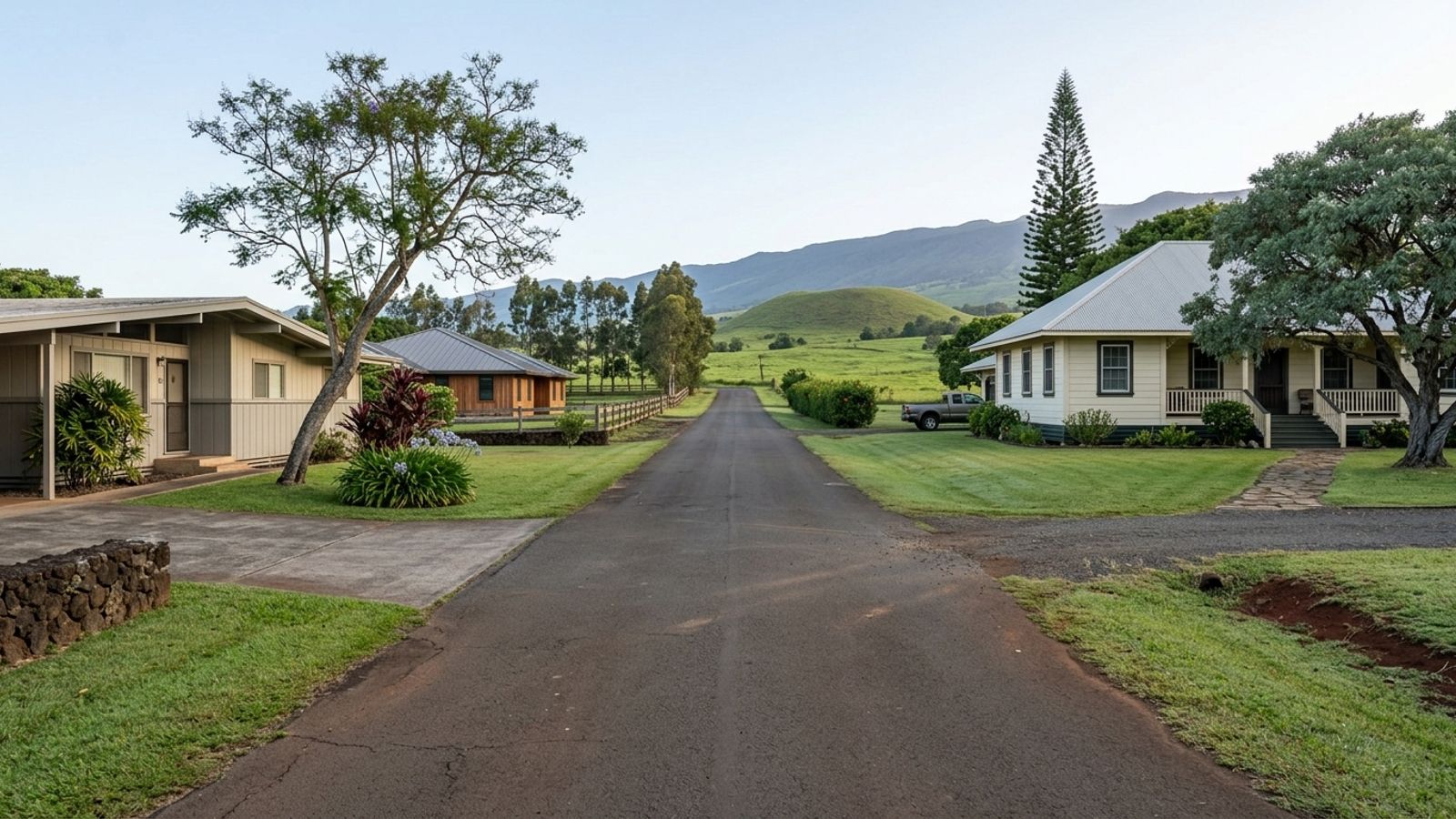
The median sale price for a home in Waimea (Kamuela), HI, is currently around $976,000. With homes spending roughly 111 days on the market and about 6.4 months of supply available, you have real time to think before you commit. That breathing room matters here, because buying a short-term rental in Kamuela, HI is a meaningfully different financial undertaking than buying a primary residence.
Lenders treat short-term rentals as higher-risk investments, which shifts the rules on down payments, interest rates, and how your income gets verified. You'll also need to account for Hawaii County regulations, specific zoning designations, and HOA rules before a bank will approve anything. Getting clear on how those pieces fit together before you make an offer is the whole game.
The Kamuela Investment Landscape
Kamuela currently has about 34 active listings, ranging from agricultural single-family homes to resort-zoned condos. To finance a short-term rental here, you have to prove two things to a lender: that the property can legally operate as a rental, and that it can generate enough income to cover its debts. Lenders look closely at both.
When you buy a primary residence, the bank focuses on your personal income and W-2s. With an investment property, the underwriter shifts attention to the home's potential cash flow and local market dynamics. Hawaii County's zoning laws and the specific covenants attached to a property determine whether it can function as a vacation rental at all - and that question has to be settled before financing can move forward.
Common Loan Types for Vacation Properties
Buyers financing a short-term rental in Kamuela typically work with three main loan products. Each one treats your personal income and the property's projected revenue differently, and your choice will come down to your cash reserves, your debt-to-income (DTI) ratio, and the equity you hold in other properties.
Lenders base their approval on Fannie Mae, Freddie Mac, or private portfolio guidelines depending on the product. Interest rates for investment properties generally run 0.5% to 0.75% higher than primary home loans. It's worth comparing each option against your actual financial picture before you land on one.
Conventional Investment Property Loans
A conventional investment loan is built entirely around your personal financial health. Underwriters calculate your DTI using standard income sources - salary, for example - against the new mortgage payment. Projected short-term rental income typically doesn't count toward qualification.
These loans often carry the lowest interest rates among investment products, but they require strong personal credit and low existing debt. If your DTI is already stretched, a conventional loan probably isn't your path here.
DSCR Loans for Vacation Rentals
A Debt Service Coverage Ratio (DSCR) loan evaluates the property's income potential rather than your W-2 income. The lender divides the home's expected annual rental revenue by its annual debt obligations - principal, interest, taxes, and insurance - and if that ratio lands above 1.0, the property is covering its own costs.
This works well for self-employed buyers or investors carrying significant personal debt. The trade-off is that DSCR loans typically come with higher interest rates and larger required down payments than conventional mortgages.
Home Equity Loans and HELOCs
If you already own property with meaningful equity, you can use a Home Equity Line of Credit (HELOC) or a standard home equity loan to fund a Kamuela purchase - either as a large down payment or to buy outright.
Tapping existing equity keeps your primary cash reserves intact. Just make sure you're folding the monthly payments on that home equity product into your total carrying costs for the new rental.
Down Payments and Credit Requirements
Investment property loans generally require a down payment between 15% and 25% of the purchase price. On a typical $976,000 Kamuela home, 20% down is roughly $195,200 in cash. Lenders require that larger upfront commitment because non-owner-occupied homes carry higher default risk - that's not negotiable.
Credit score minimums rise for vacation rentals too. Conventional investment loans usually require a FICO score of at least 680, though getting above 720 will land you meaningfully better rates. DSCR lenders generally want scores of 700 or higher, depending on the property's debt ratio.
The down payment isn't the last cash ask, either. Underwriters require you to show liquid reserves covering three to six months of mortgage payments, property taxes, and insurance. Slow booking seasons and unexpected vacancies are real, and lenders want to see that you can carry the property through them.
How Hawaii County Regulations Impact Your Loan
Hawaii County Ordinance 25-50, passed in 2025, requires a county-wide registration system for all rentals operating under 180 consecutive days. Registration opened September 1, 2026, with a grace period running through December 31, 2026. Operating an unregistered rental after that date can trigger enforcement action and fines up to $10,000.
Before approving an investment loan, lenders verify that a property can legally operate. Kamuela falls under overlapping regulatory frameworks - including Ordinance 2018-114, which restricts new unhosted short-term rentals to specific zones like V (resort), CG, and CDH districts. Properties outside those zones need a Nonconforming Use Certificate (NUC) if they operated prior to 2018.
HOAs add another layer entirely. In the Mauna Lani resort area, some condo buildings permit vacation rentals and others prohibit them outright. Certain HOAs have updated their bylaws to set minimum-night stays that effectively block one- or two-night bookings. You need to review the specific parcel zoning and the condo declarations for any property you're considering seriously - lenders will deny financing if private covenants ban short-term rentals, regardless of what the county allows.
Estimating Rental Income for Loan Approval
The income data for Kamuela varies depending on the source. AirDNA reports that short-term rentals here average a $1,097 daily rate with 57% occupancy, driven largely by the area's concentration of luxury homes. RedAwning's 2026 data shows a blended average daily rate of about $158, with one-bedroom units near $111 and four-bedrooms around $292. In resort areas like Mauna Lani, condos typically list between $280 and $650 per night on booking platforms.
Appraisers and lenders pull local market data like this to project gross revenue for DSCR calculations. They also factor in operating expenses, including property management fees - which for Kamuela short-term rentals generally run 10% to 30% of rental revenue.
Here's how the math plays out in practice: if a lender uses an estimated $6,000 in monthly rental income and the property's total monthly debt obligation is $5,000, the DSCR is 1.2, which typically satisfies most lender requirements. The key is giving underwriters realistic, localized data rather than broad island-wide averages that won't hold up under scrutiny.
Frequently Asked Questions
Can I use a conventional loan for a short-term rental in Kamuela, HI?
Yes. A conventional loan can be used to buy a short-term rental - but the lender qualifies you based on your personal debt-to-income ratio and W-2 income, not the property's projected rental revenue. You'll typically need a down payment of at least 15% to 20% and a strong credit score.
What is a DSCR loan and how does it work for vacation homes?
A Debt Service Coverage Ratio (DSCR) loan approves you based on the property's cash flow rather than your personal income. The lender divides the home's projected annual rental income by its annual debt obligations. If the income exceeds the debt, the property qualifies for funding.
How much down payment is required for an investment property in Kamuela, HI?
Most lenders require a 15% to 25% down payment for an investment property. On Kamuela's median home price of roughly $976,000, a 20% down payment is about $195,200. You'll also need to show cash reserves sufficient to cover several months of mortgage payments.
How do Hawaii County zoning rules impact my ability to get a mortgage for a Kamuela vacation rental?
Lenders won't approve a loan based on rental income if the property can't legally operate as a short-term rental. Hawaii County restricts new unhosted rentals to specific zones like V (resort) and CG districts, and requires a $500 unhosted registration fee under Ordinance 25-50. If the home is in an agricultural zone without a pre-2018 certificate, financing it as a vacation rental becomes very difficult.
Will lenders let me use projected Airbnb income to qualify for a short-term rental loan in Kamuela?
It depends on the loan type. Conventional lenders usually don't allow projected short-term rental income to count toward qualification. DSCR lenders do - they specifically use those projections, such as the $280 to $650 nightly rates seen in Mauna Lani condos, to approve the loan.
Are mortgage rates higher for a short-term rental property than a primary home in Kamuela?
Yes. Expect rates to run roughly 0.5% to 0.75% above standard owner-occupied rates. Lenders charge that premium to offset the higher default risk that comes with non-primary homes - and it applies regardless of how strong your personal credit is.
Leave a Reply

Agent RS 83053