
Blog > What to Expect When Buying a Luxury Home in Kamuela, HI
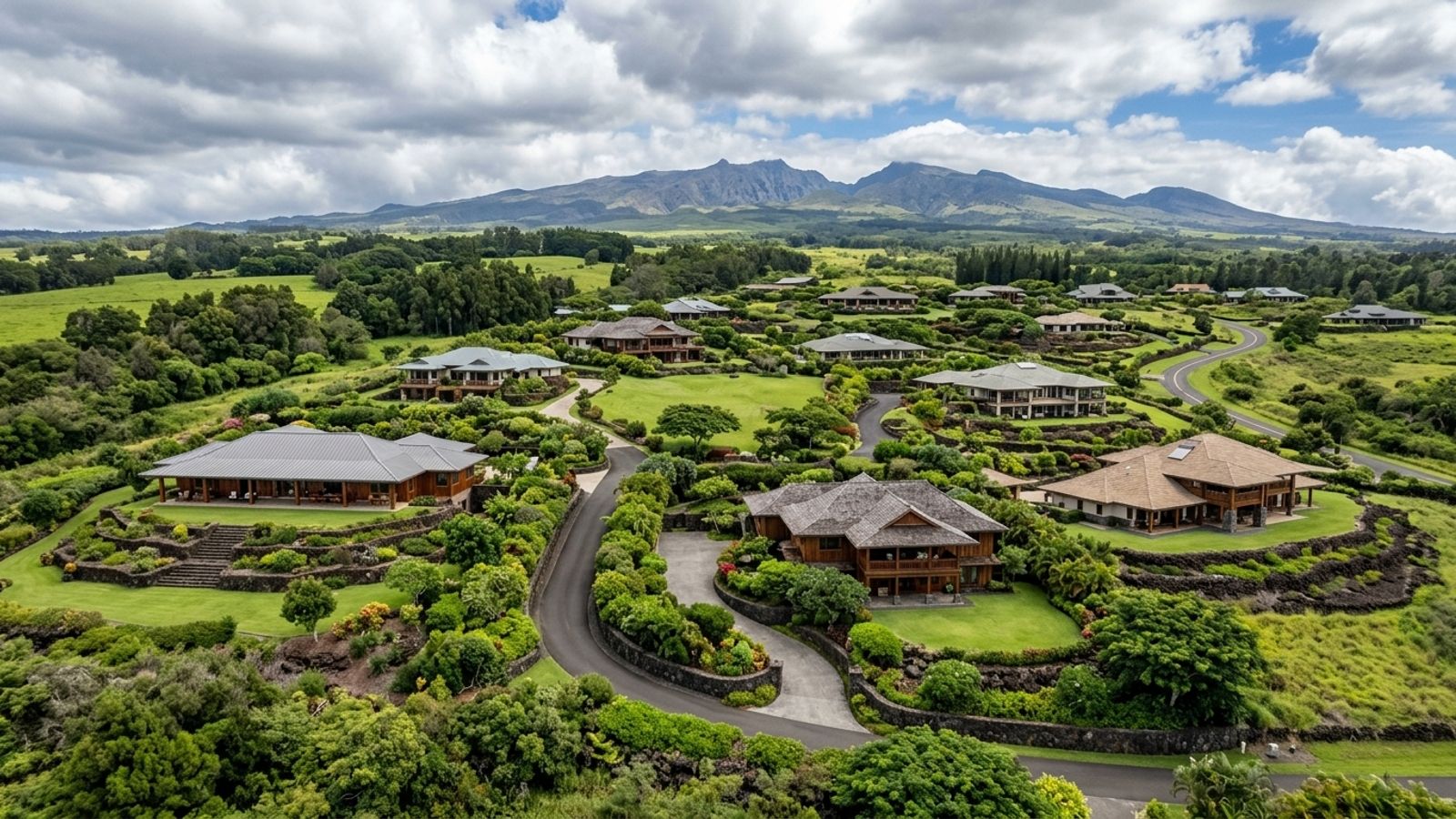
The broader median home price in Waimea sits around $976,854, with properties spending roughly 111 days on the market. The top tier of luxury real estate in Kamuela, HI operates on an entirely different scale - its own rules, its own timeline, its own expectations.
Buying a high-end estate here means dealing with distinct architectural styles, specific county tax tiers, and financing structures that have nothing in common with a standard coastal Hawaii purchase. If you're looking at this market seriously, the preparation starts well before you tour your first property.
Defining High-End Real Estate in Kamuela
Listing aggregators like Sotheby's and Zillow Luxury generally treat the $2 million range as the entry point to the top tier in this area. True top-tier estates list anywhere from $7 million up to $28.9 million. That's a wide band, and where you land in it shapes everything from your financing structure to your annual tax bill.
The county council formalized a new property tax structure in 2026 that directly affects buyers at these price points. Knowing the brackets before you start touring isn't optional - it's how you set a budget that holds.
Local Price Thresholds and the Tier 3 Tax
Hawaii County currently taxes residential property in two primary tiers: $11.10 per $1,000 of assessed value for the portion under $2 million, and $13.60 per $1,000 for value above that mark. Owner-occupied primary residences with a homeowner exemption pay a flat rate of $5.95 per $1,000 regardless of the home's value.
Earlier in 2026, the county passed a Tier 3 tax rate targeting non-owner-occupied second homes valued above $4 million. This new bracket affects about 842 parcels on Hawaii Island. It explicitly excludes primary residences and long-term rentals, so how you intend to use the property matters.
Upcountry Architecture and Microclimate Features
Waimea sits in a cool upcountry microclimate at elevation - a genuinely different environment from the tropical coast, not just a talking point. Large residences here commonly feature gas or wood-burning fireplaces, which are rare elsewhere on the island.
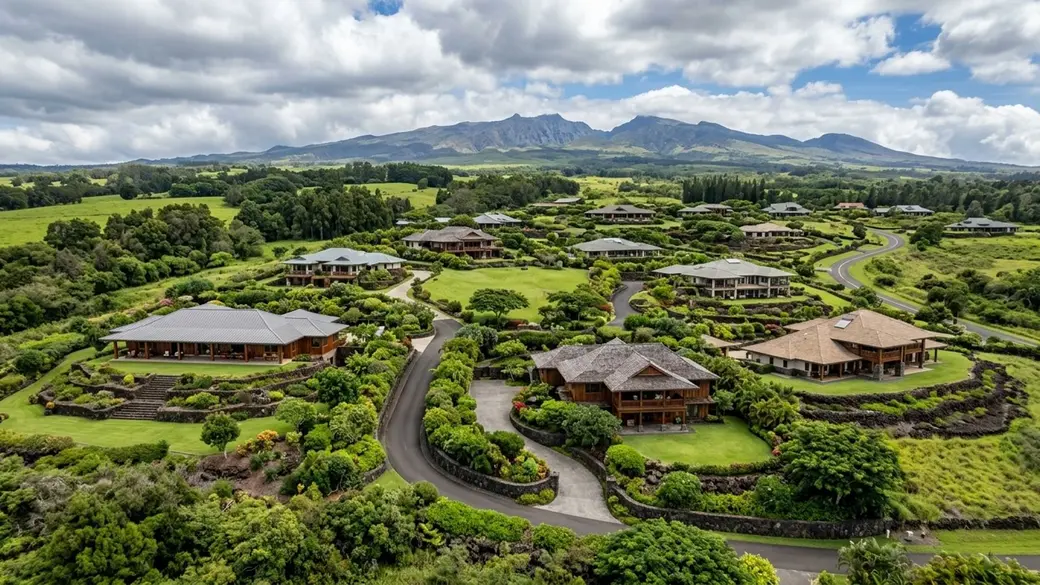
Homes often blend traditional Hawaiian design elements - low-pitched roofs, extensive outdoor lanai space - with contemporary open-concept interiors. Some estates use the historic Kauhale style, a compound of separate structures connected by open pathways. Others follow the Kamaaina style, known for larger acreage lots.
Extensive lava-rock terracing is common, and a lot of this land is suited for equestrian or agricultural use. Large picture windows oriented toward Mauna Kea and the surrounding pastoral ranchlands are a recurring feature you'll notice almost immediately.
How to Finance Your High-End Purchase
Buyers financing a large purchase on Hawaii Island work under specific county loan limits, and the documentation requirements are a different category of scrutiny than a conforming loan. Whether you're using a mortgage or paying cash, sellers expect verification of your financial capability early - not after you've found the property you want.
Getting your financial portfolio organized in advance isn't just good advice. It's the difference between being taken seriously and being passed over.
Jumbo Loans in Hawaii County
For 2026, Hawaii County has a conforming loan limit of $1,249,125 for a single-family home. Any mortgage above that amount is a jumbo loan. This limit is slightly lower than in Maui and Kalawao counties, where the conforming limit reaches $1,299,500. If you're relying on a jumbo loan, expect underwriters to request extensive asset statements and multiple years of tax returns.
Preparing Cash Offers and Proof of Funds
Cash purchases bypass the mortgage underwriting timeline, but they don't bypass documentation. Sellers mandate a proof of funds (POF) letter before they'll approve a private showing or review an offer. A POF letter from your bank or wealth manager confirms you have liquid capital available to cover the purchase price. Make sure those funds are accessible and not tied up in illiquid assets when you're in the offer phase.
The Appraisal Process for Custom Estates
Lenders require specialized appraisers for multimillion-dollar properties - custom builds and unique acreage don't have obvious comparables. Finding sales that come close to a Kauhale-style compound takes more time than appraising a standard subdivision home. Appraisers also have to evaluate premium materials, smart home technology, and detached structures. Count on weeks, not days.
Finding High-End Properties in the Area
Waimea currently has roughly 34 homes in active inventory across all price points. The most expensive estates, though, don't always show up on public listing sites. High-net-worth sellers often prioritize privacy, and buyers who rely only on standard aggregators won't see the full picture.
Searching the Public Market
Public listings on the Multiple Listing Service (MLS) give you a baseline - current asking prices, days on market, visible inventory. The MLS shows many properties in the $2 million range, but it rarely captures every custom estate for sale. It's a starting point, not the whole story.
Off-Market Sales and Private Listings
A pocket listing is a property a broker holds privately without syndicating it to the public MLS. Sellers choose this route to avoid public open houses and limit showings to qualified buyers. Accessing that inventory means working with a well-connected local broker - agents share private listings within their professional networks, so your access is only as good as who represents you.
Inspecting Custom and Expansive Estates
A standard home inspection covers the basic structural and mechanical components of a house. On an estate with multiple detached structures and specialized amenities, a single general inspector isn't close to sufficient. Plan for a longer due diligence period and multiple professionals working the property - that's not inefficiency, that's what thorough looks like here.
Moving Past the Standard Home Inspection
Large acreage properties and Kamaaina-style residences require specialized evaluations for roofing, foundations, and agricultural land features. Complex HVAC setups and custom plumbing networks typically need separate experts. When a property includes guest houses or staff quarters, the inspection timeline stretches accordingly. A team of professionals reviewing every structure can take several days.
Evaluating Smart Systems and Custom Features
High-end estates here frequently incorporate advanced smart home technology for security, climate control, and lighting. General inspectors don't typically test the integration and software health of those systems - you'll need technicians for that. Custom pools, lava-rock retaining walls, and commercial-grade kitchen appliances all require their own evaluation. Verifying that these amenities function correctly is part of protecting what you're spending.
Working With a Local Broker
Recent data shows homes in the Waimea area sell for about 97.3% of their list price on average. Negotiating a favorable deal on a multimillion-dollar property requires an agent who knows local pricing dynamics well enough to work within them - not just cite them.
A local broker also means access to the specialized legal, financial, and inspection professionals you'll need. Discretion matters in this segment, and so does market knowledge you can't get from reading listings.
Agents who specialize in upcountry properties understand the implications of the new Tier 3 tax laws and county zoning regulations - including the real difference between purchasing agricultural land versus a residential parcel. Your representative will manage escrow coordination, title insurance, and specialized appraisers. That coordination isn't administrative detail. It's what keeps a complex transaction from stalling.
Frequently Asked Questions
What price point is considered a luxury home in Kamuela, HI?
Listing aggregators generally view the $2 million mark as the starting point for high-end homes in the area. True top-tier estates range from $7 million up to $28.9 million, and the county's Tier 3 tax bracket for non-owner-occupied second homes begins at $4 million.
How do I find off-market luxury homes in Kamuela, HI?
You'll need to work with a well-connected local real estate agent. Sellers of multimillion-dollar estates often use pocket listings to maintain privacy, and those homes are only shared through broker networks rather than the public MLS.
What are the jumbo loan limits for Hawaii County?
For 2026, the conforming loan limit for a single-family home in Hawaii County is $1,249,125. Any mortgage above that figure is considered a jumbo loan and will require specialized underwriting.
What special inspections are needed when buying a luxury estate in Kamuela, HI?
You should hire specialists to evaluate custom pools, smart home technology, and commercial-grade appliances. Estates with multiple structures or Kauhale-style compounds require extensive inspections of separate roofing and foundation systems as well.
How long does it typically take to close on a high-end property in Kamuela?
Closing on a custom estate takes longer than a standard transaction - complex appraisals and extended inspection periods see to that. Cash purchases can move faster, but you should still allow several weeks for complete due diligence on large acreage properties.
How do I verify a real estate agent's experience with luxury buyers in Kamuela, HI?
Review their past sales history to see whether they regularly close transactions in the $2 million to $28.9 million range. An experienced broker should also be able to speak clearly to local nuances like the Tier 3 tax and what the upcountry microclimate means for the properties you're considering.
Leave a Reply

Agent RS 83053