
Blog > What to Expect When Becoming a Landlord in Kamuela, HI
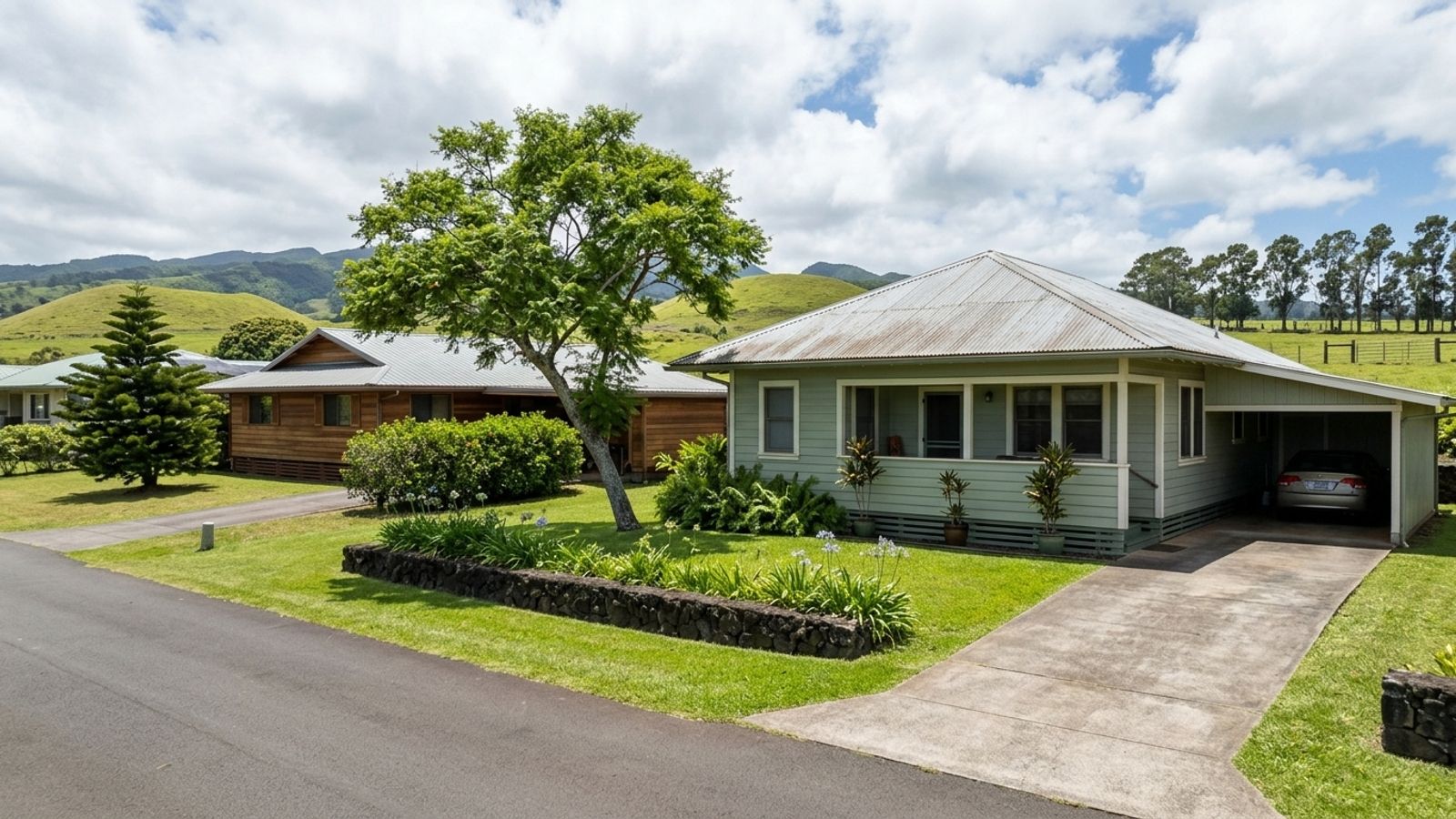
Single-family homes dominate the Kamuela (Waimea) market: 14 of the 16 homes sold in the 90 days ending September 30, 2026, were single-family houses, which means your rental investment will almost certainly be a full-sized house rather than a starter condo.
Turning that house into a rental requires following Hawaii's specific tax structure, county zoning rules, and the state's landlord-tenant code. The math and the legal requirements shift depending on whether you sign a tenant for a year or rent to guests by the night.
Key Takeaway
In Kamuela, becoming a landlord usually means buying a single-family house and renting it on a long-term lease, since short-term use depends on each property's zoning and county permits. Homes are taking a median 92 days to sell, giving you time to negotiate a price that a 12-month rent can cover. If the long-term numbers don't work on a given house, check whether that specific property qualifies for short-term use before walking away.
Who This Guide Is For
You own, or are about to buy, a home in Kamuela and are deciding whether renting it out pays and what Hawaii and Hawaii County require before you sign a tenant.
Is Becoming a Landlord in Kamuela Worth It?
Because buying a rental in Kamuela almost always means buying a single-family house, and short-term use depends on zoning and county permits property by property, becoming a landlord here is a long-lease bet. It pays off if you use the market's slow pace to buy at a price a 12-month rent can carry.
With a median 92 days on market and 6.2 months of single-family supply, sellers wait. The 98.3% sale-to-list figure shows buyers negotiated something off the asking price. Single-family values rose 10.4% (based on 14 sales) over the year, and while appreciation helps the long game, it doesn't pay the monthly mortgage.
Kamuela is the postal name for the town of Waimea on Hawaii Island. Rental comps and county records appear under both names, so search both when you're pricing rent.
Before you buy, a few questions are worth sitting with. Do you want tenants by the year or guests by the night? Do you live on Hawaii Island, or will you need to hire an on-island agent? Will a 12-month rent cover the mortgage, tax, and insurance on a house near the median price? And can you take a call about a broken water pump from wherever you happen to be? A breakdown of real estate investing in Kamuela outlines what to expect before closing on a property.
Long-Term or Short-Term Rental in Kamuela?
The first decision you make dictates which county rules apply to your house. Hawaii County defines short-term vacation rentals based on the length of the stay, and that definition determines your permits, your taxes, and your legal relationship with whoever is staying in the home. Compare the options carefully to see which fits your plans.
Long-Term Rentals
Leases of 30 days or more sit outside Hawaii County's short-term vacation rental definition. This is the path with the fewest county permits, and it fits a house-only market. If you sign a lease for three months, it's not a vacation rental under county rules, but it still owes Hawaii's transient accommodations tax because the stay is under 180 days. You can compare a short-term vs long-term rental in Kamuela to see the full breakdown.
Long-term tenants have full Landlord-Tenant Code protections, and gross income is usually lower than nightly rates. A bad tenant is also a longer, slower problem to resolve.
Short-Term Vacation Rentals
Stays under 30 days fall under Hawaii County's vacation rental rules. Whether a given Kamuela property qualifies depends on its zoning and permits. You can check where short-term rentals are allowed and review the short-term rental regulations before planning your budget around Airbnb revenue and occupancy.
What you give up is certainty. You can't assume a house you buy can be used as a vacation rental. Confirm the specific parcel with Hawaii County Planning before you price your offer around nightly income.
How to Become a Landlord in Kamuela
Hawaii state law and Hawaii County regulations require several registrations before you hand over the keys. Skipping these steps can leave you unable to collect rent or facing fines.
The state's landlord-tenant code governs how you handle deposits, leases, and tenant communication, and it doesn't give you much wiggle room.
Get a General Excise Tax License
All rental income from property located in Hawaii is subject to the state General Excise Tax (GET). You must register for a GET license (Form BB-1) with the Department of Taxation before collecting rent. The state GET rate is 4%, and Hawaii County adds a 0.5% surcharge, bringing the combined rate to 4.5% for 2026. Hawaii taxes gross rent, not profit, so you owe GET even in a year the rental loses money.
Decide before you list whether your rent includes this tax or passes it through to the tenant. Quoting rent without accounting for GET effectively cuts your income by the tax rate.
Name an On-Island Agent If You Live Elsewhere
Under Hawaii law, any owner who resides outside the state or on a different island from the rental unit must designate an agent residing on the same island. If you own a Kamuela rental but live on Oahu, the mainland, or anywhere else off-island, you must name someone on Hawaii Island to act for you and include their name in the written rental agreement.
That agent has to be someone who will respond. A friend who doesn't answer the phone can leave you out of compliance and slow every repair.
Use a Lease That Follows Hawaii's Landlord-Tenant Code
Your lease must follow Hawaii Revised Statutes Chapter 521. It should cover the term, the rent amount, whether rent includes GET, the deposit, pets, maintenance duties, and any HOA rules. Hawaii also requires a written move-in inventory and condition report. Check subdivision CC&Rs and any HOA rules for minimum lease terms or rental restrictions before you set the term.
A clause conflicting with Chapter 521 is unenforceable no matter what the tenant signed. A generic mainland lease form can leave you exposed.
Screen Tenants with Written Criteria
Set written criteria and apply them identically to every applicant. Examples include an income-to-rent ratio, verifiable rental history, and no unpaid prior judgments. Under Hawaii fair housing law, you can't turn down an applicant just because they would pay with a Section 8 housing voucher.
Criteria you don't write down, or apply unevenly, are where fair housing complaints start, even when intent was never the problem.
Collect and Return the Security Deposit by the Rules
Hawaii caps the security deposit at one month's rent. You may require a separate pet deposit if pets are allowed. When the tenant moves out, you have 14 days to return the deposit or provide a written, itemized accounting for any deductions. Tie the deposit to the move-in inventory, because photos and the signed report are what let you deduct for damage.
Missing the 14-day return deadline or skipping the itemized statement can cause you to lose the right to keep any of the deposit at all.
Get the House Ready to Rent
Fix anything that affects habitability, confirm working smoke alarms, document the condition, and know your utilities. Ask whether the home is on county water or a catchment system, and who services the pump and filters. Write appliance and yard-care responsibilities into the lease.
A water or pump failure can make the home uninhabitable fast, and the repair falls on you, so know what you're buying before you close.
Costs of Owning a Rental in Kamuela
Your monthly expenses change the day a home stops being your primary residence. Taxes, insurance, and maintenance all carry different rates for investment properties, and the difference can be significant at Kamuela's price points.
Budget using quotes for your specific parcel rather than the previous owner's bills, which may reflect exemptions you won't qualify for.
Property Tax on a Rental
Hawaii County taxes by property class. The day a Kamuela home stops being your residence, its property tax can jump because it no longer qualifies for the homeowner class. For fiscal year 2026-27, the residential rate is $11.10 per $1,000 of net taxable value, compared to the homeowner rate of $5.75. Lower rates exist for qualifying long-term rentals ($7.75) and affordable rental housing ($5.75). Confirm the property's tax class with the Hawaii County Real Property Tax Office once it becomes a rental.
Owners who budget using the seller's tax bill often underestimate their costs. That bill may reflect a homeowner exemption you won't get as a landlord.
Landlord Insurance
A standard homeowner policy usually doesn't cover a rental property. You need a landlord dwelling policy with liability coverage and ideally loss-of-rent coverage. Get a landlord insurance quote that shows the hurricane deductible, loss-of-rent coverage, and how the parcel's lava-zone rating affects the premium.
A percentage-based hurricane deductible at the single-family median price can mean a large out-of-pocket bill before coverage starts. Keep reserves for it.
Maintenance and Reserves
Budget reserves for repairs and vacancy. Ask whether the home has a cesspool, septic system, or sewer connection. Hawaii requires every cesspool in the state to be replaced by 2050, so a Kamuela house on one carries a future conversion bill. Check the roof and schedule a termite inspection before buying.
The conversion cost is yours either way. You'll pay for it now or at resale, when buyers will price it into their offer.
What Rent Covers a Median-Priced House
Start from the single-family median of $1,004,600. Apply your lender's current investment-property rate and minimum down payment to get the monthly principal and interest. Add monthly property tax at the $11.10 residential rate, plus an insurance quote for your specific parcel. Add GET on the rent.
Compare that total to the rent you can charge. If the rent falls short, the gap is your monthly cost of holding the house. To close it, you need a lower negotiated price or a larger down payment. You can explore financing an investment property to see how loan terms affect this math.
At these prices, a long-term rent often won't cover full carrying costs with a standard down payment. Many Kamuela landlords are betting on appreciation and accepting a monthly gap. Know your gap before you buy.
Self-Manage or Hire a Property Manager?
Hawaii law requires off-island landlords to name an agent on the island, and a manager covers that requirement. Your location and your available time will dictate this choice.
If you live on Hawaii Island, you can handle the daily work yourself, but that's worth thinking through honestly before you decide.
Managing the Rental Yourself
Self-managing makes sense if you live on Hawaii Island and can handle showings, screening, rent collection, GET filings, and repairs yourself. You'll coordinate contractors, draft the lease, and handle the move-in inventory. If you live off-island, you still need an on-island agent under the state rule regardless.
Every call, late payment, and repair is yours. Mistakes on deposits or notices fall on you personally under Chapter 521.
Hiring a Local Property Manager
A licensed Hawaii Island property manager handles leasing, screening, rent, maintenance, and notices, and can act as your required on-island agent. Ask property managers for the full fee schedule, including the monthly percentage, leasing fee, renewal fee, and maintenance markup. Ask for proof of a Hawaii real estate license. A manager can also handle short-term rental setup and management if your property qualifies for vacation use.
Management fees come straight out of a rent that may already be thin on a house near the median price. Plug the quoted fees into your worked example before you sign anything.
At a Glance
- Median sale price, all homes: $977,035 (90 days ending Sept. 30, 2026; based on 16 sales, so treat as a rough guide)
- Median sale price, single family: $1,004,600 (90 days ending Sept. 30, 2026; based on 14 sales)
- Year-over-year price change: all homes +8.3%, single family +10.4% (90 days ending Sept. 30, 2026; 16 and 14 sales)
- Median days on market: 92 for both all homes and single family (90 days ending Sept. 30, 2026)
- Sale-to-list price: 98.3% for both all homes and single family (90 days ending Sept. 30, 2026)
- Share sold above list: all homes 18.8%, single family 14.3% (90 days ending Sept. 30, 2026; 16 and 14 sales)
- Months of supply: all homes 5.8, single family 6.2 (90 days ending Sept. 30, 2026)
- Homes for sale (inventory): all homes 31, single family 29 (90 days ending Sept. 30, 2026)
- Median price per square foot: all homes $647, single family $658 (90 days ending Sept. 30, 2026)
Becoming a Landlord in Kamuela FAQs
How Much Money Do You Need to Become a Landlord in Kamuela?
Ask your lender for today's investment-property minimum down payment percentage, then apply it to the single-family median price. Add closing costs, which your lender can estimate, and several months of reserves for repairs and vacancy. Because the median rests on a 14-sale sample, your exact cash needed will vary by the specific house you choose.
How Much Can a Landlord Raise Rent in Hawaii?
Hawaii has no statewide rent control, so the amount is not capped. Under a month-to-month tenancy, a landlord must give written notice of at least 45 consecutive days before a rent increase takes effect, or at least 15 consecutive days for tenancies shorter than month-to-month. Under a fixed-term lease, rent changes only as the lease allows or at renewal.
What Is the 90 Day Rule in Hawaii?
The 90-day minimum rental rule applies to the City and County of Honolulu on Oahu, not Hawaii County where Kamuela is located. A federal judge granted a permanent injunction against Honolulu's Ordinance 22-7, allowing existing owners who were lawfully renting for 30 to 89 days to continue operating. Hawaii County draws its vacation-rental line at stays under 30 days.
What Can't a Landlord Do in Hawaii?
A landlord cannot enter a unit without at least two days' notice except in emergencies, change locks to force a tenant out, shut off utilities, or retaliate against a tenant who reports code violations. It's also illegal to discriminate against a protected class or refuse an applicant because their rent comes from a housing voucher.
Is It Hard to Evict a Tenant in Hawaii?
For nonpayment of rent, a landlord must give a tenant a detailed written notice that includes a 10-calendar-day cure period and mediation-center information before filing for summary possession. Kamuela eviction cases go to the Third Circuit District Court, and a landlord cannot remove a tenant without a court order. This is general information, so consult a Hawaii attorney for specific cases.
What Are Red Flags When Screening Tenants in Hawaii?
Watch for altered pay stubs, references that don't check out, unpaid prior judgments, and pressure to skip the application or pay cash to move in immediately. A housing voucher is not a red flag and cannot be grounds for refusal in Hawaii.
Is Kamuela the Same as Waimea?
Yes. Kamuela is the postal name for the town of Waimea on Hawaii Island, and county records appear under both names.
What County Is Kamuela, HI In?
Kamuela is in Hawaii County, on Hawaii Island. Hawaii County sets your property tax class and rate, and its vacation rental rules apply, rather than Honolulu's regulations.
Sources
- Redfin: Data Center
- Hawaii Department of Taxation: General Excise and Transient Accommodations Tax
- Hawaii State Legislature: HRS Chapter 521
- Hawaii State Legislature: HRS 521-44
- Hawaii State Legislature: HRS 521-21
- Hawaii State Legislature: HRS 521-53
- Hawaii State Legislature: HRS 521-68
- Hawaii County: Ordinance 2018-114 and Ordinance 25-50
- Yahoo News: Hawaii home rentals ruled exempt
- Hawaii Property Tax: Hawaii County Tax Rates
- Hawaii State Legislature: Act 125
- Hawaii State Legislature: HRS 368F-2
Leave a Reply

Agent RS 83053