
Blog > What to Expect for Airbnb Revenue and Occupancy in Kamuela, HI
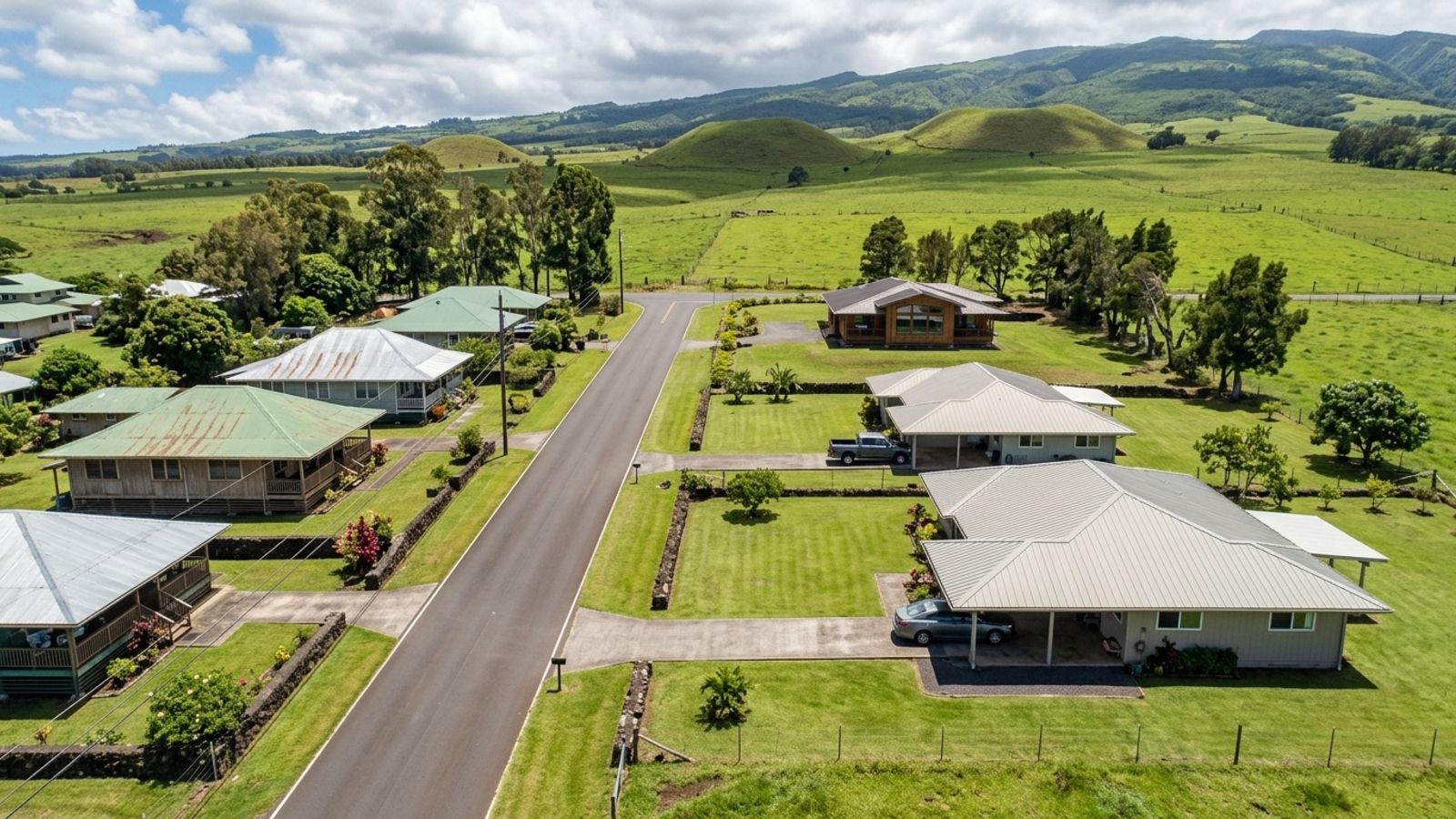
Kamuela, HI - often referred to locally as Waimea - isn't your typical Big Island beach town. The paniolo heritage runs deep up here, and the visitors it attracts are a different breed: people who want cooler elevations, historic home tours, and events like the annual Parker Ranch 4th of July and Labor Day Rodeos. That said, you're still just a short drive from the white sand beaches of the Kohala Coast and the major resorts that anchor it. That combination - upcountry character with coastal access - is exactly what makes buying a short-term rental in Kamuela interesting for investors.
The numbers reflect a serious purchase. The median sale price in the Waimea area is currently around $976,000, with homes averaging 111 days on the market. And while that median sits just under $1 million, vacation-ready properties with more square footage are actively listed between $1.8 million and $2 million. If you're putting that kind of capital in, you need a clear-eyed read on what the rental income looks like - and what the county will and won't let you do with the property.
Income and Occupancy Trends for Local Rentals
Annual short-term rental revenue in Kamuela runs from a median of about $46,000 up to an average of $81,400 for active listings. Top performers clear $93,000 a year. Where you land in that range depends on the size of the home, its exact location, and how well it suits the kind of traveler drawn to the upcountry environment.
The visitor flow here is relatively steady, but income isn't flat across the calendar. You'll want to model your earnings across both high-demand windows and the slower shoulder months - don't build your underwriting around a single average figure.
Average Daily Rates and Annual Earnings
The average daily rate for a short-term rental in Kamuela sits at approximately $482. That figure shifts based on platform, property size, and what the home offers. A two-bedroom condo near town commands a different nightly rate than a four-bedroom house with expansive views of the Kohala Mountains.
To get a rough annual gross, multiply your expected daily rate by your projected booked nights. For illustration only: a property holding that $482 average for 215 nights a year would gross around $103,600 before taxes, management fees, and maintenance costs.
Seasonal Booking Patterns
Year-round occupancy in Kamuela averages between 58% and 62%. The strongest booking windows are the winter months - January through March - and the mid-summer push in July. During those periods, properties fill quickly and owners can typically hold higher nightly rates.
The shoulder seasons tell a different story. May and September are your softer months, and you should plan for fewer bookings during both. Owners who use that downtime for maintenance and deep cleaning tend to come back into peak season in better shape.
Property Types That Attract Consistent Bookings
What a property is - its physical footprint, its zone, its amenities - determines who books it and whether you can legally rent it in the first place. Kamuela's housing stock spans agricultural expanses, residential neighborhoods, and commercial zones, so there's real variety to work with.
The area currently has about 6.4 months of housing supply, which gives buyers a reasonable window to be deliberate. The condo-versus-detached-home question isn't just about lifestyle preference - it shapes your target guest, your nightly rate, and the permit process you'll face.
Condos and Resort-Zoned Units
For investors focused on unhosted rentals, condominiums and apartments in commercial or multi-family zones are typically the most straightforward path. These units attract visitors coming for local events or exploring the northern half of the Big Island.
Units with dedicated parking and updated interiors book most consistently. Because county zoning limits where unhosted rentals can legally operate, a condo already sitting in an approved commercial designation carries a real built-in advantage.
Single-Family Homes with Unique Amenities
Larger detached homes draw a different guest - groups who want the space and feel of an upcountry estate while staying close enough to reach the Kohala Coast. Properties with outdoor lanais, fire pits, or dedicated storage for beach and hiking gear tend to stand out in the listings.
If you're looking at a single-family home as an investment, verify the zoning before you assume it qualifies for short-term rental. A large agricultural parcel can look like a perfect vacation property and still be prohibited from unhosted operations under county rules.
Short-Term Rental Rules and Zoning Laws
Hawaii County administers the short-term vacation rental (STVR) rules that apply to Kamuela. Under Bill 108 and Ordinance 25-50 - which took effect for the 2025 and 2026 periods - any rental of 180 days or less must be formally registered with the county.
Operating without the proper approvals isn't a gray area; it's a violation of local law. Registration requires submitting an STVR application through the county's EPIC online system, including site plans, tax map key (TMK) details, and local contact information. You'll also need building approvals and must register for both General Excise Tax (GET) and Transient Accommodations Tax (TAT).
Permitted Zones for Unhosted Rentals
The county draws a hard line on where new unhosted STVRs can operate: Resort, Hotel, Commercial, and Multi-family commercial zones only.
In single-family residential and agricultural zones, new unhosted rentals are prohibited - full stop - unless the property holds a grandfathered Nonconforming Use Certificate (NUC) from the county. If you're considering a residential property for unhosted rental, confirm whether an NUC exists and whether it transfers before you close.
Registration and Annual Fees
The county's permit fees are specific. Initial registration runs $250 for hosted rentals and $500 for unhosted rentals. Annual renewal is $100 for hosted properties and $250 for unhosted properties. Build those into your operating budget from the start.
Optimizing Your Investment Property
Getting the property and the permit is the beginning, not the finish line. Nearly 19% of homes in the Waimea area recently sold above list price, which tells you buyers are committing serious capital - and that the margin for weak management is thin.
Dynamic pricing matters here. You'll want to push rates during the peak winter and summer seasons and stay competitive when May and September slow things down. A local property management company on the Big Island can handle guest communication, on-the-ground maintenance, and the kind of consistent standards that drive positive reviews. That's not optional overhead - it's what protects the investment.
Frequently Asked Questions
What is the average Airbnb occupancy rate in Kamuela?
Kamuela properties see an average year-round occupancy rate of 58% to 62%. Bookings peak during the winter months (January through March) and in July, while dropping during shoulder seasons like May and September.
Are short-term rentals profitable in Kamuela?
They can generate strong returns - active listings average around $81,400 in annual revenue, and top performers exceed $93,000. Profitability depends on your purchase price, which currently sits at a median of $976,854, alongside ongoing management and tax expenses.
What are the local Airbnb regulations in Kamuela and Hawaii County?
Hawaii County requires all rentals of 180 days or less to be registered. Unhosted rentals are only permitted in Resort, Hotel, Commercial, and Multi-family commercial zones unless the property carries a grandfathered Nonconforming Use Certificate.
What type of property gets the highest Airbnb booking rates in Kamuela?
Condos in approved commercial zones and single-family homes with standout amenities - particularly expansive outdoor spaces - tend to perform well. Properties that offer easy access to both upcountry events and the Kohala Coast hold the most consistent booking schedules.
How much are the transient accommodations taxes and fees for Kamuela short-term rentals?
Tax rates vary, but owners must register for both General Excise Tax (GET) and Transient Accommodations Tax (TAT). The county charges a $500 initial registration fee for unhosted rentals, followed by a $250 annual renewal fee.
What happens if I operate an Airbnb in Kamuela without an active STVR permit?
Operating an unregistered short-term rental violates Hawaii County's Ordinance 25-50 and Bill 108. You must submit your application through the county's EPIC system and receive approval before hosting any guests for stays of 180 days or less.
Leave a Reply

Agent RS 83053